Off the Beaten Path in SPAIN
Travel is top of everyone’s wish list at the moment and it’s not simply escapism. Some people want experiences that fundamentally help them reconnect with who they are and with the world around them. This blog is for travelers who want to go beyond the typical trip. We highlight real travel experiences and couple them with great outdoor adventures and cultural experiences. Experiences that remind us what travel is at its best and what travel can do for our wellbeing. We believe sharing our experiences will encourage fellow travellers to examine what they know, digest what they have learned on their travels and come up with, possibly, a new way of experiencing travel, which to our mind is truly the art of living.
Waking up one morning, we travelled down the path from our home in Toronto on a journey that would change our lives forever. Imagining as beautiful a route as it might be, with swaying sugar palms silhouetted against orange skies and golden fields sparkling in an evening light. We had dreams of an epic, adventurous journey. We were a couple who had decided to use our retirement years as an opportunity to roam Andalucía with a young heart and mind.
Though retirement kept warning us we were getting older, our whole lives were still ahead of us now and we knew we mustn't waste a moment of it doing anything we didn't want to do. We would choose to stay only in the experiences and with the people that made us happy. All we had to do was place one foot in front of the other to be set free and hold the doubters with our aging hands, fix them with a glimmering eye and say, “We have been to a place where none of you have ever been, where none of you may ever go”. We found ourselves visiting places not listed in guidebooks and breathing in a different sort of experience. The specific details of our travels are usually determined thorough our research but are often determined by pure chance. Our trip to Andalucía was no different and we follow a simple recipe when planning our destinations.
Accommodations must be very comfortable, in a private mountain retreat or located in a quiet natural park, cleaner than my grandmother's house.
Must be an excellent base from which to explore outdoor activities surrounded with wild, brooding scenery to revel in.
Convenient access to cultural events and dining for that special final departure date celebration.
Reading the paper one morning and eating my toast with orange marmalade, I was reminded of the times my grandmother would make her homemade orange marmalade and how she would walk to the local market and when in season, select Sevilla oranges for this purpose. Then, as I turned the page of my newspaper, ‘rhymes with Orange’ a comic which gives a quirky look at the unusual events that find their way into everyday life caught my eye. ‘Orange’ seemed to be calling to me and the theme for our adventure in Andalucía would be born. The orange reference is how our itinerary would be linked in some way or other and would lead us down some unusual paths not usually found in travel guides or the Atlas Obscura.
My initial google search for orange revealed ‘Orange is the New Black’, a women’s prison drama, a thriller, that starts with an inmate being boiled alive. Perhaps useful information if we experienced annoying passengers on our flight, but further research was definitely required. I discovered oranges are symbolic of endurance and strength, orange is the color of fire and flame. It represents the red of passion tempered by the yellow of wisdom and it is the symbol of the sun. These are the colours on the Spanish flag and the characteristics we preferred to embrace as travellers to Spain.
Oranges are unknown in the wild and are a hybrid of tangerines and the pomelo. We adore oranges, and so do Spaniards. Walk into any Andalucía restaurant or home and you’re likely to encounter a contraption for extracting this gorgeously sweet and pungent juice for daily consumption. Like Spanish cured ham, fresh-squeezed orange juice is made from locally grown produce found throughout the country. With this information we flew from Toronto to Barcelona and spent the day looking at the local sights. As we walked along La Rambla on our way to the Barcelona’s Sant’s Train Station, a friendly man brought us a cold orangeade (he pronounced it, ‘awwn/jin/aahd).
We briefly considered not drinking it. We did, though and it was delicious. Even as a visitor we felt at home here, there was so much kindness. To see something where people were able to come together to remember that at all times ‘Esto es lo que hacemos, this is what we do’, it reminded us that humanity can be good.
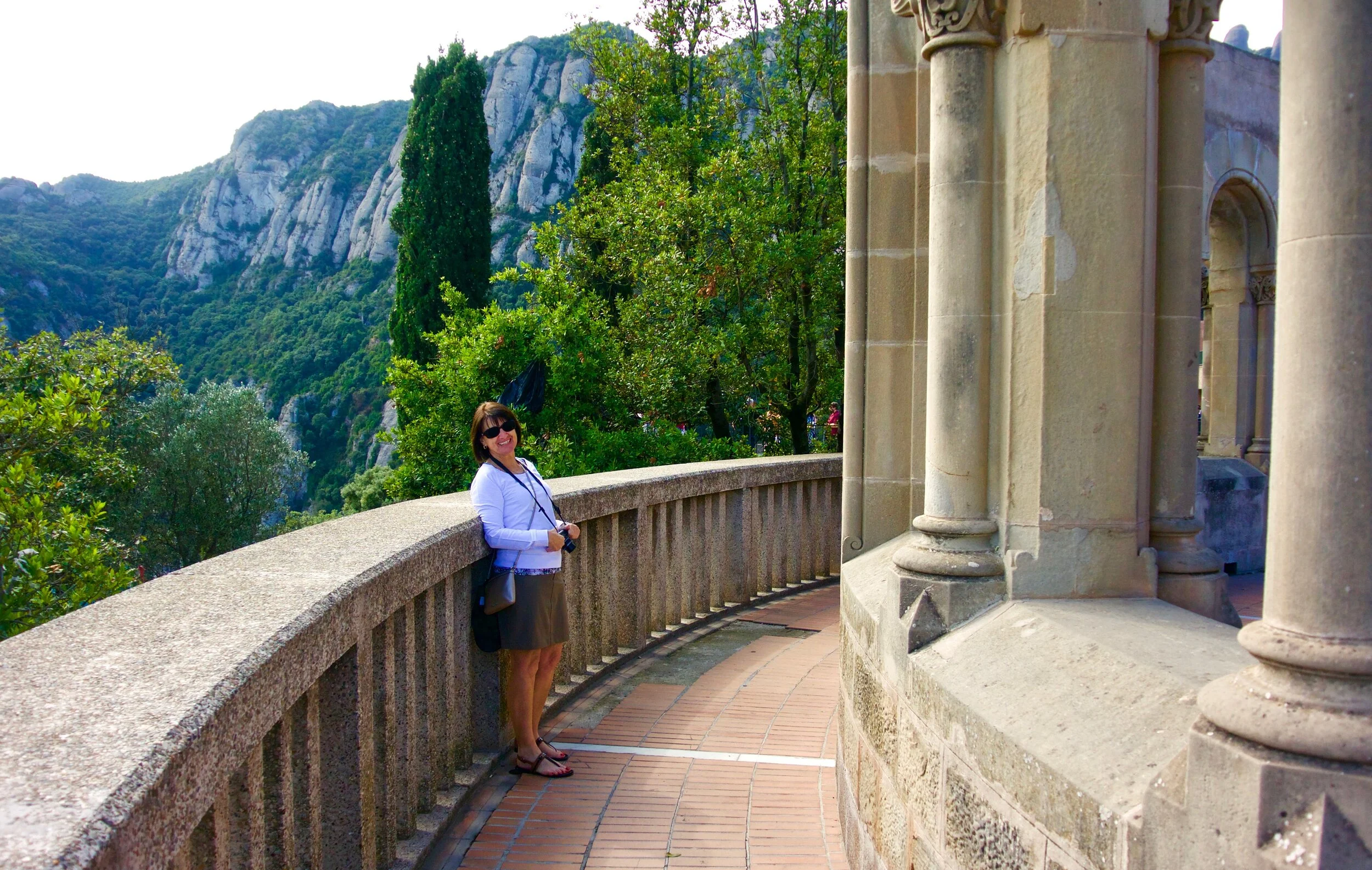
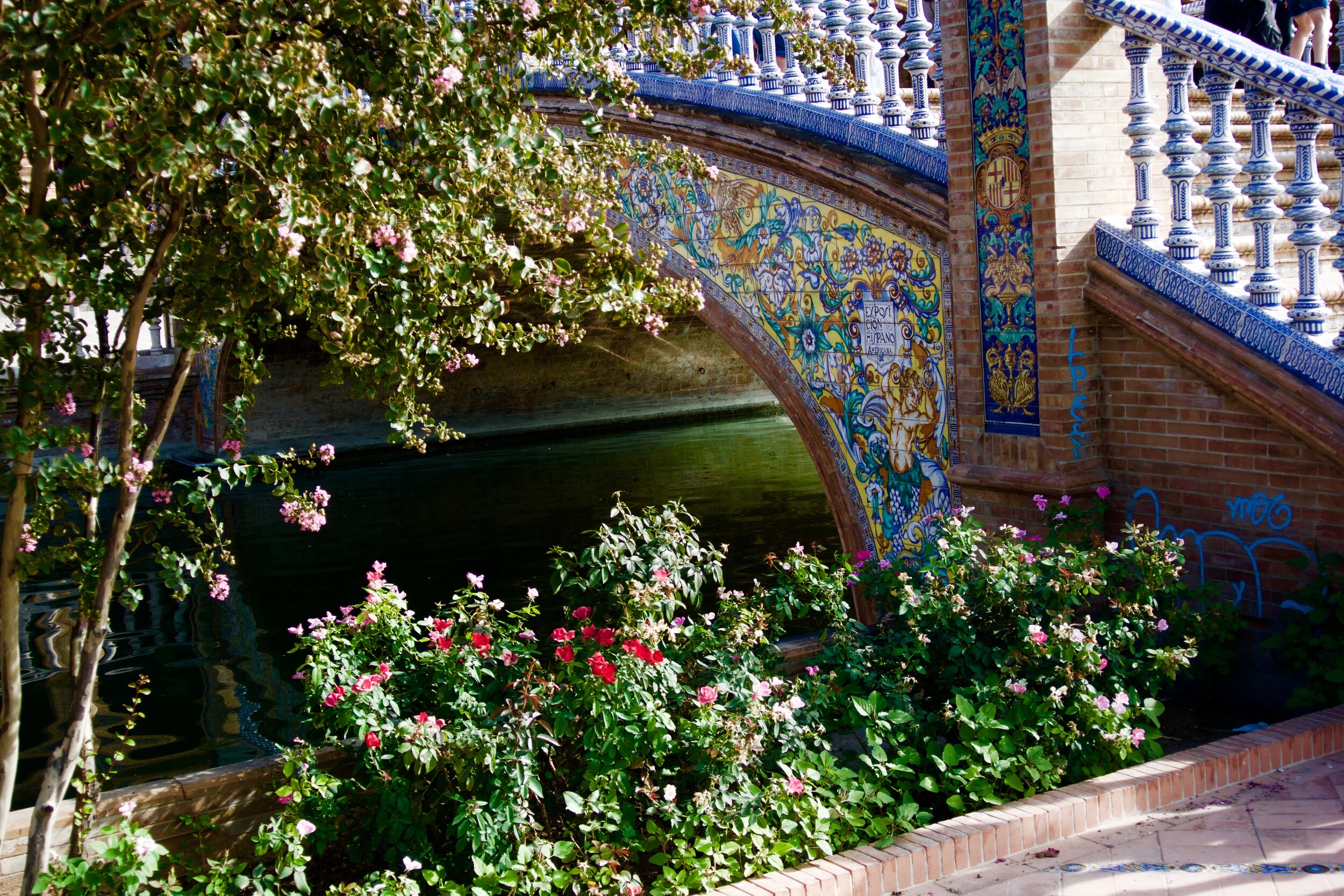
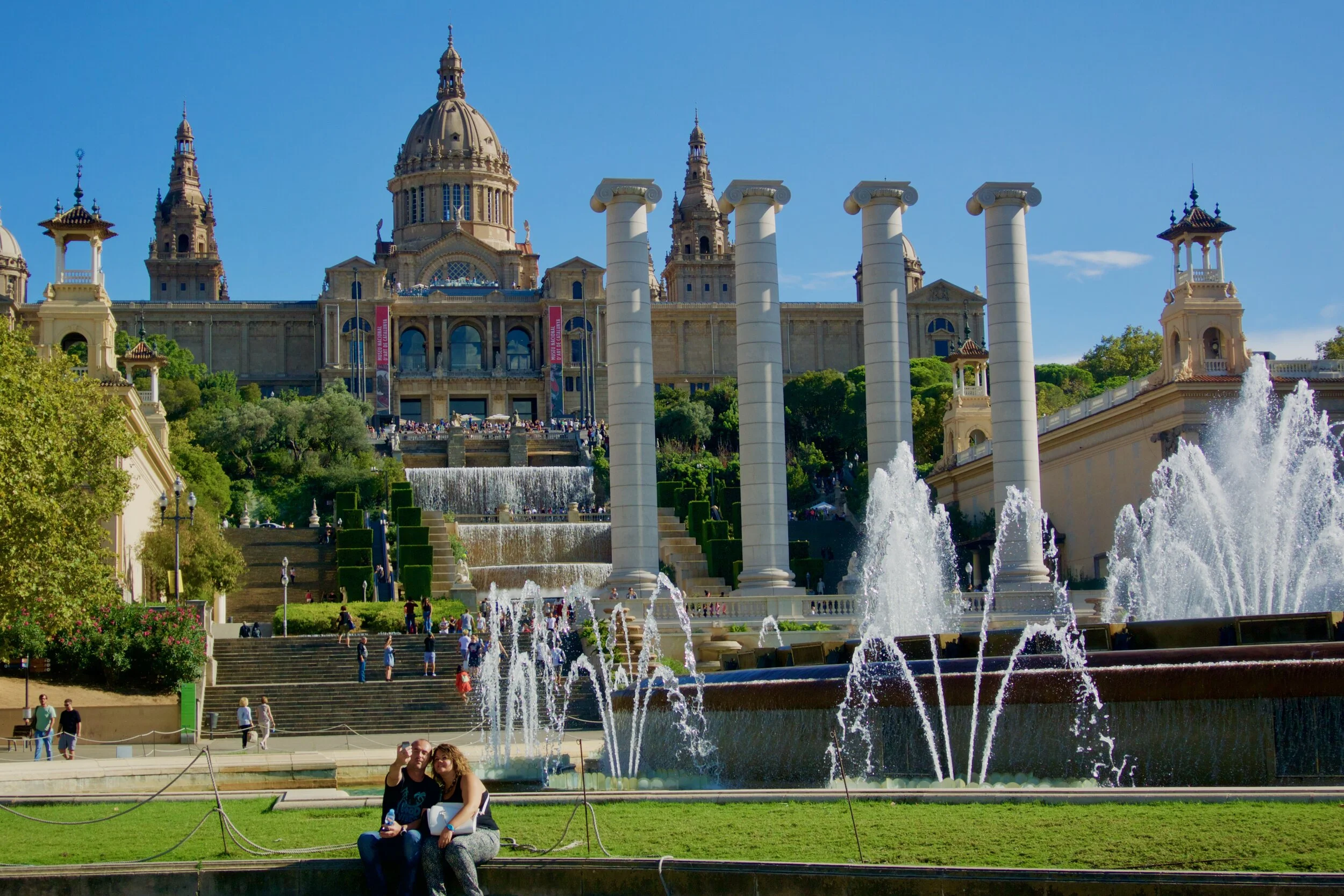
Barcelona made a good first stop for our trip. With the high-speed AVE train, Barcelona is five hours away from Sevilla, faster & more comfortable than flying
I have always encouraged people to take trains, your carbon footprint is reduced, and you can pack as many liquids as you like! Adventure begins from the moment you board rather than when you arrive. I remembered as a student, the split-flap boards that were like a menu of the world and in a blur of rotation, Paris becomes Rome; Milan turns into Berlin; and a dozen other cities whirrr into somewhere else effortlessly providing arrival and departure information at the station. I loved that the sound signaling the changing of information, the clack-clack-clack sound represented the anticipation of travel and that sound recalls a wistful memory to travel days gone by and a romantic reminder of travel's so-called ‘golden age’ when I travelled Europe as a student.
I missed that iconic sound as we waited for the modern Alta Velocidad Española (AVE). The high-speed rail service that can reach speeds of up to 310 km/h. This extensive rail network allows for fast connections between Barcelona to Sevilla. The 829km journey from the city of Barcelona provides five hours of spectacular views through the Spanish countryside to flamenco, sherry, Islamic architecture, pristine beaches and mountain scenery.
The ticket master collected the remaining tickets from the passengers and left for the next compartment as our train departed for Sevilla. There was a young man sitting down across from us and who began calmly sharpening a large carving knife. Though there was not a minute of panic among the other passengers, we were still alarmed the young man might be dangerous and was worried about his reasons for bringing a large knife onto the train. The young man was in fact a professional “Cortador de Jamones” who was on his way to a festival. He specializes in ham from a rare breed of pig called the Manchado de Jabugo, which takes its name from the distinctive dark patches on the animals’ coats. His name was Donato and came to the area after working in the construction industry. He had returned to his native village, working in a farm in Maladúa, an abandoned village around eight kilometers from the village of Cortegana.
He explained, Iberian ham is cut with a long, narrow, and very flexible knife. It's very important to always cut in the direction of the muscle so the flavour of the fat and the meat always stays in the same direction. Ibérico is the highest grade so the challenge is to get the maximum number of slices every time you cut a ham. Come 10 am on the day of the festival, he will cut a slice of ham to be hung on the top of a greasy pole in an over-crowded town square called the ‘palo jabón’. The goal is to climb and retrieve this slice of ham with the crowd chanting and singing encouragement (while being showered by water hoses). The moment the slice of ham is dropped from the pole, a loud signal goes off and then begins the chaos. The scene is surreal, he said, but probably no less so than the Jarramplas festival where a man dressed in body armor, is pelted by turnips as symbolic punishment for stealing cattle. “We are all doing strange things in all parts of the world, everything is mixed with religion in Spain,” he said. “I find it interesting we are still doing these festivals, it is a way to see where we are going and where we have come from, looking back to look forward. I expect some traditions will evolve over time and some will disappear completely”. Donato gave us his card and invited us to visit his store in Madrid to sample Ibérico ham before we depart Spain. What an eloquent reminder that travel forges connections and inspires transformation.
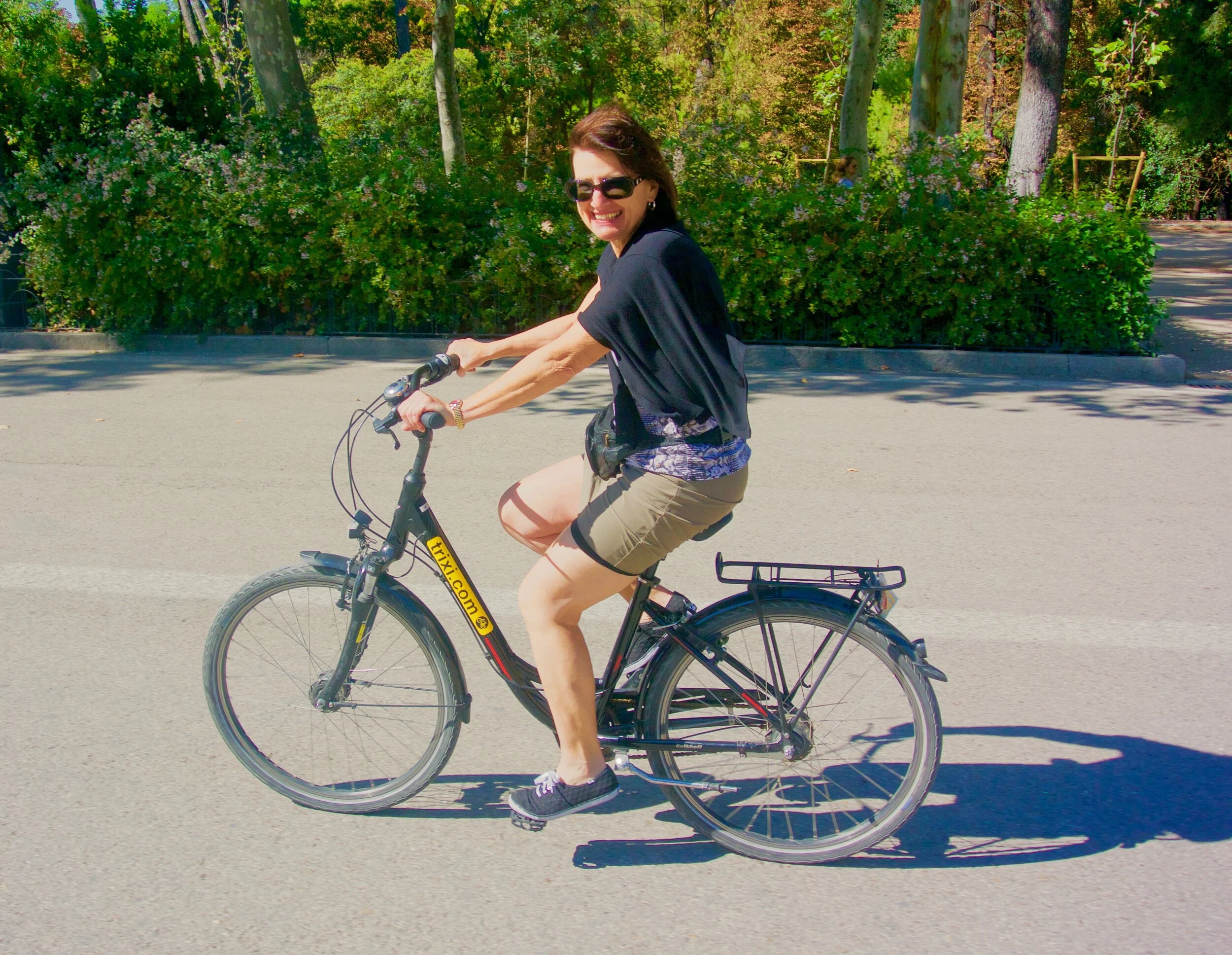
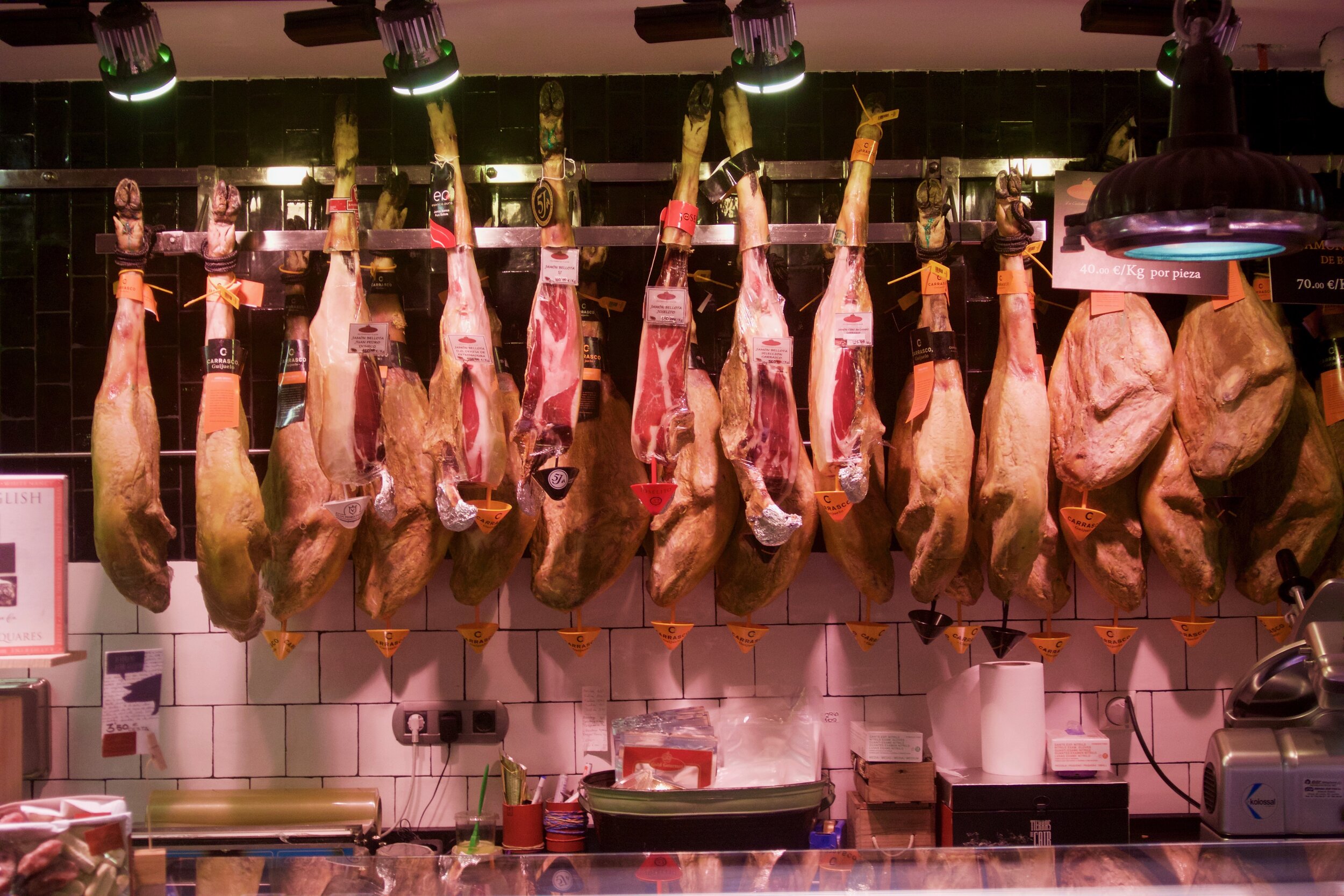

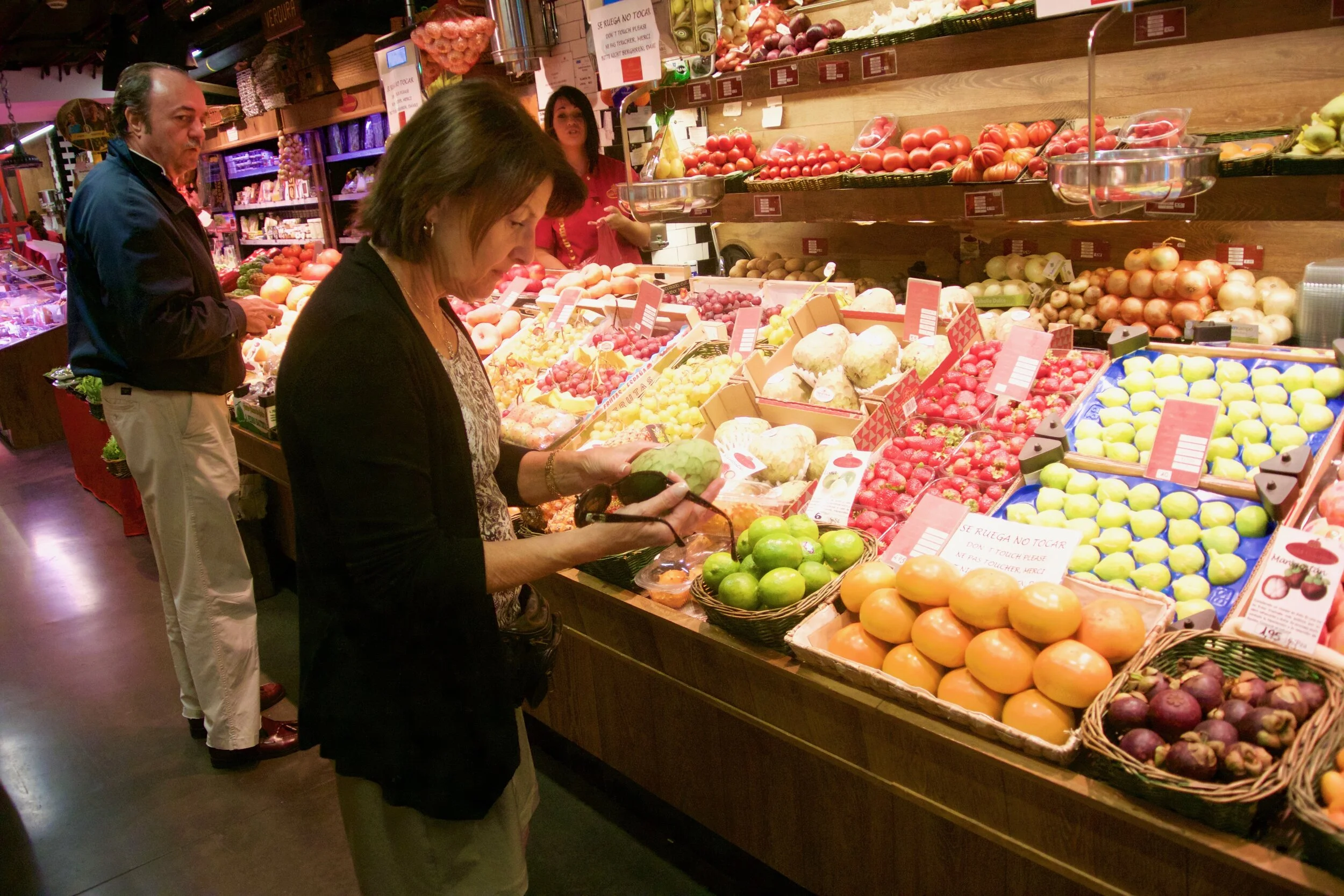
Cycling to sample Donato’s Ibérico ham at the Mercado de San Ildefonso, a traditional Spanish food market in Malasaña, Madrid & the oranges
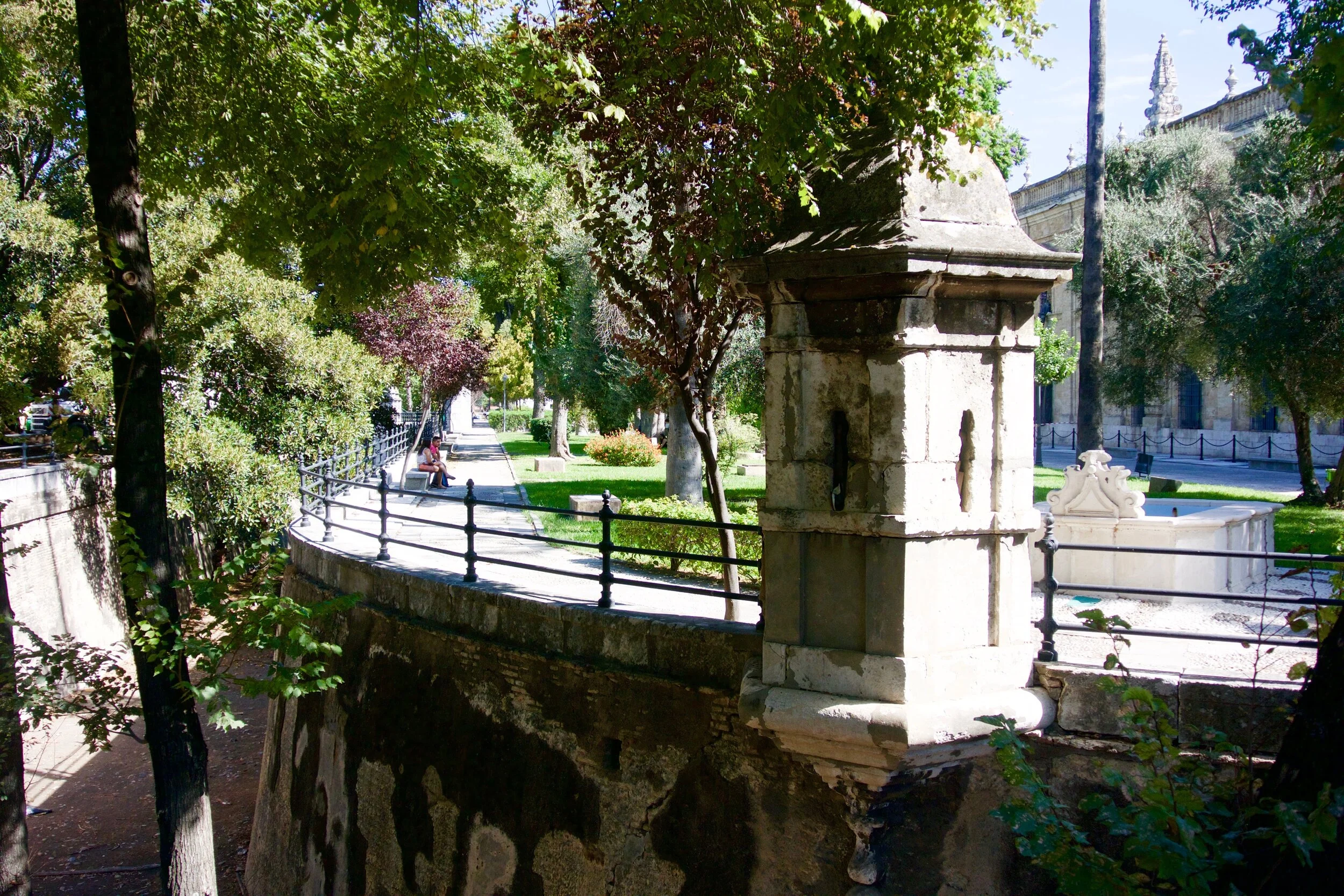
We whimsically landed in Sevilla, a city of passion and arguably the most beautiful city in Andalucía as its capital, meaning few visitors ever venture beyond its enchanting city centre. But for those who are intrepid enough to explore the landscape surrounding it, the province has a great deal to offer. We drove to our connection in the Sierra Nevada mountains to a magnificent farmhouse situated high in the mountains at the end of a forestry track and set in a 17-acre estate, completely on its own with nothing but gorgeous mountain terrain all around. The vast views which opened up in front of us over the southern Sierras to the Mediterranean Sea and beyond were fantastic. It was a delightfully quiet place with hidden gardens that provide sanctuaries of shade and greenery offering privacy in the sun. Behind the circular pool, a short path connected to the famed European GR7 footpath which crosses the Alpujarra’s before continuing all the way to Greece. There were, of course, any number of rather shorter walks in the mountains, all of them truly wonderful. This would be our home for the next week before returning to Sevilla.
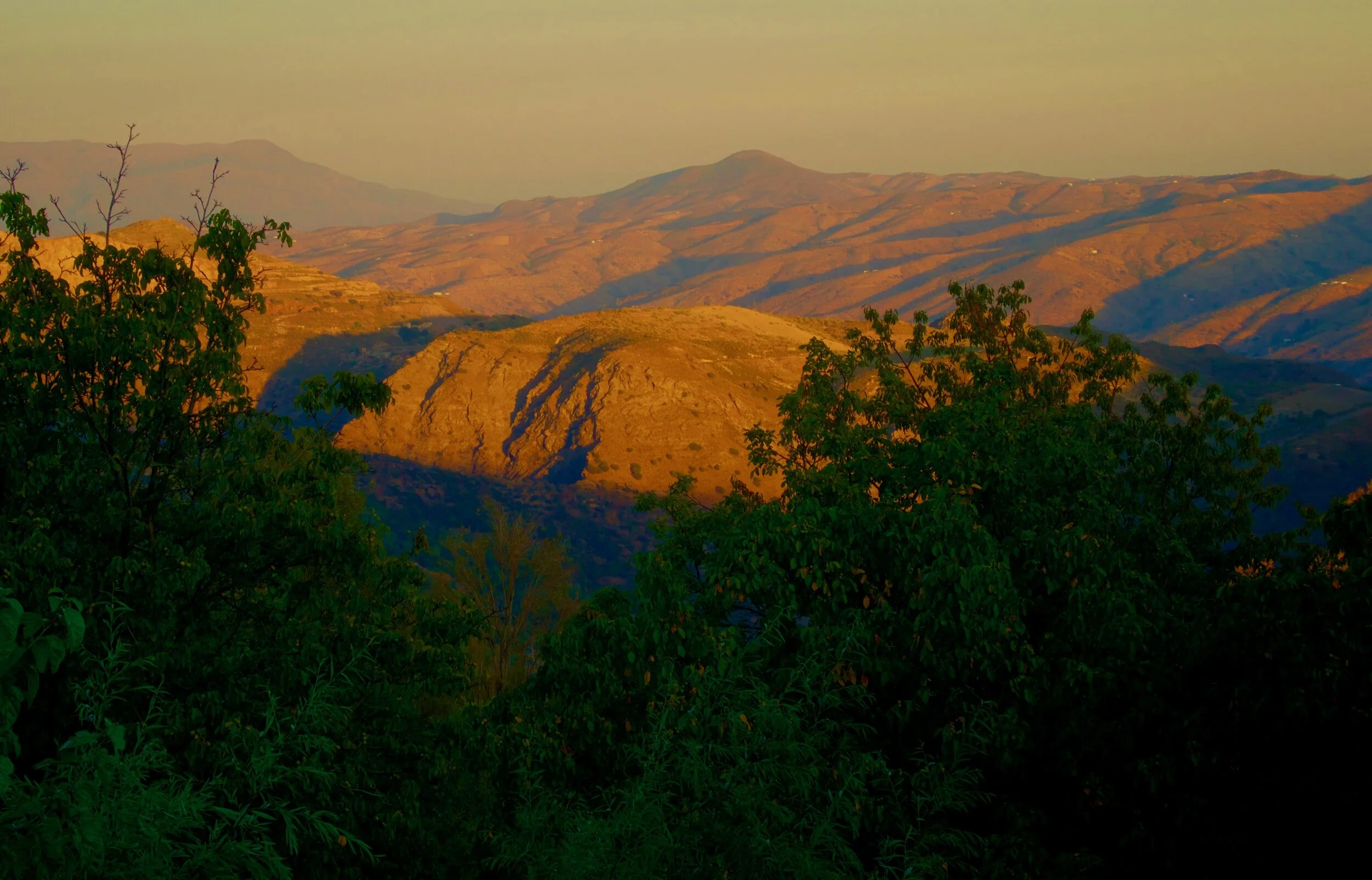
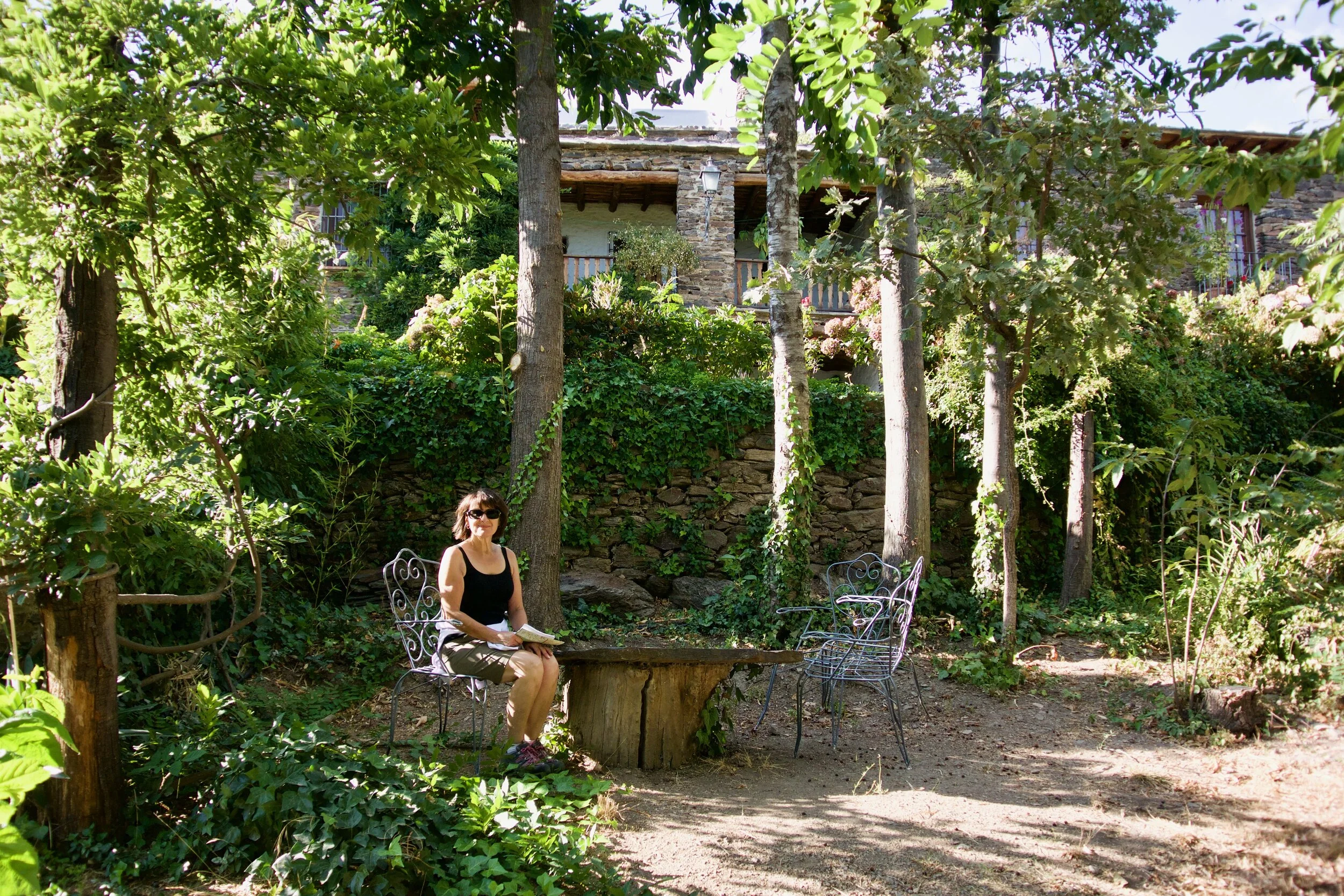
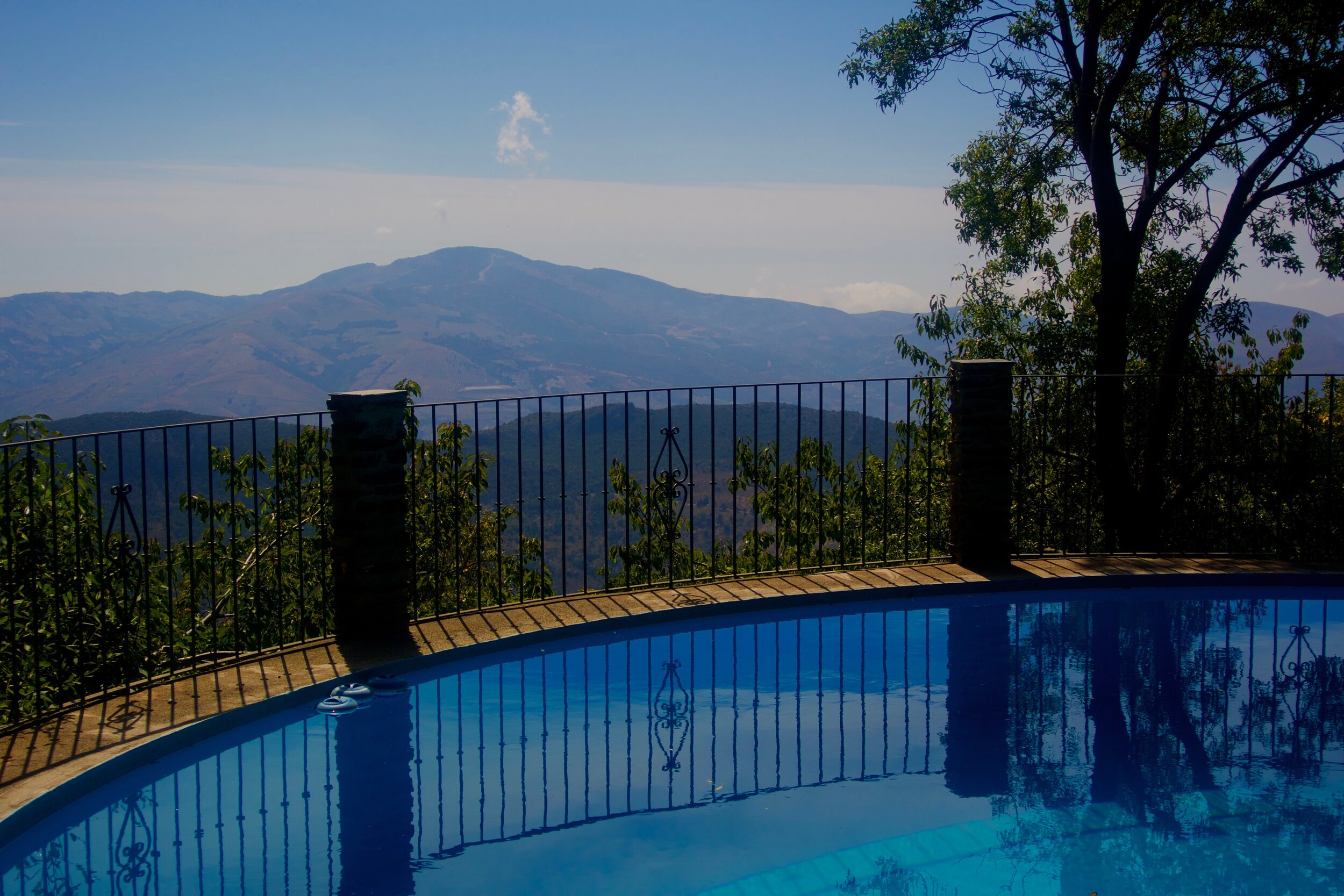
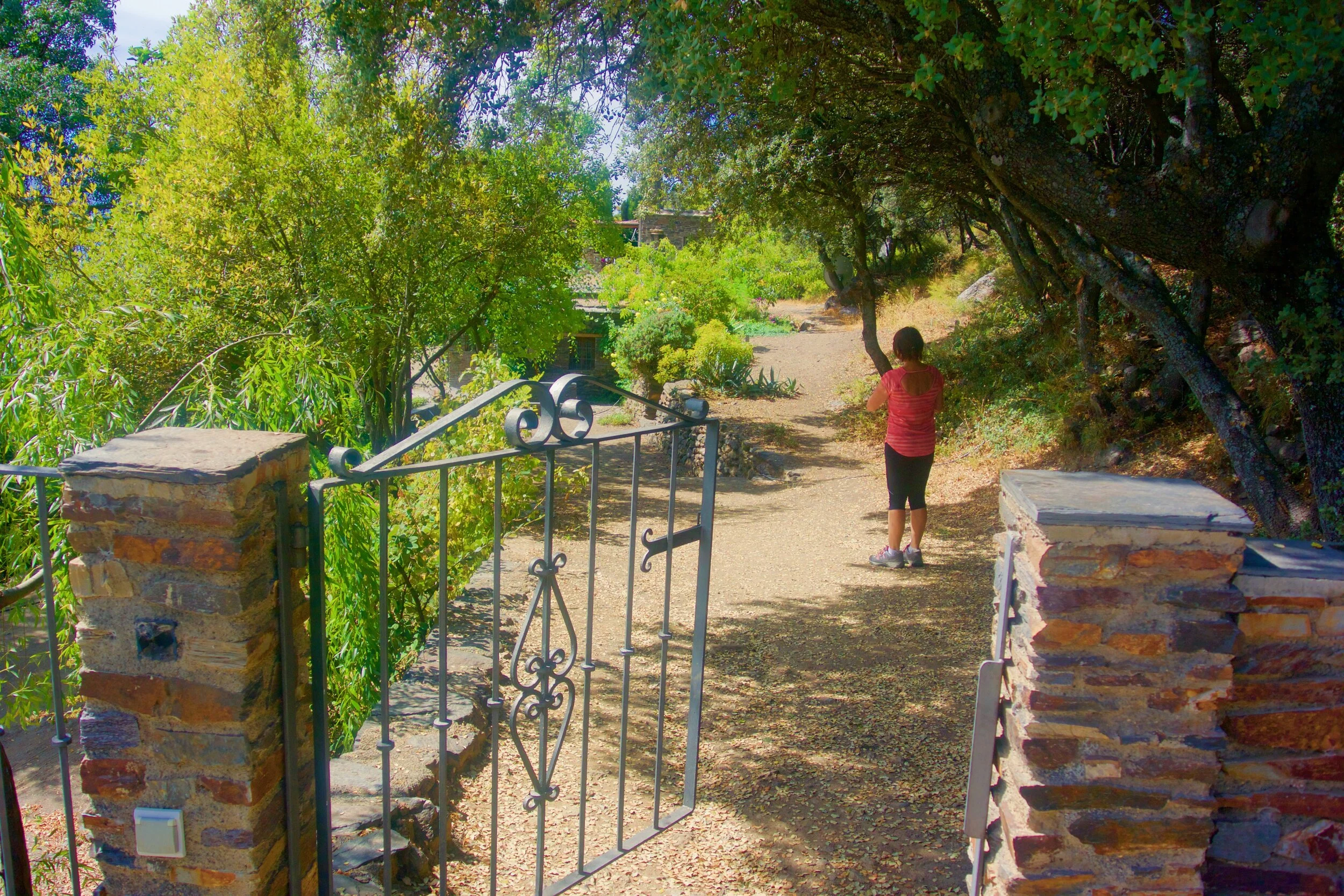
A beautiful orange sunset at Villa Cortilo Prado Toro in the Sierra Nevada. The backgate lead directly to the ‘Desert Walkway of the Sorrowful Angel’ on the GR7.
Five kilometres away, Capileira, the second highest village in Spain shaped into the mountain scape at 1,435 metres above sea level. Its old streets, happily too narrow for most cars, entwine and criss-cross their way a full hundred metres down the side of the gorge. Situated on the edge of a National Park and surrounded by forests of chestnut trees, the white walls of its houses were splashed with bright tendrils of bougainvillaea flowers, and the national park provides a stunning backdrop of rolling meadows, woodlands and undulating hills. A large part of Spain’s magic is seeing the transformation from day to night and back, how locals go about their daily lives and by discovering the hidden ‘rincones’. Watching the young girls fetch water from the town well that morning was celebratory. Known for its iron-rich water considered good for the heart, according to the message in blue-and-white tiles above the fountain, ‘those who drink its slightly effervescent water will find true love’.
Sitting on the fountain edge was an old lady with a skill to wove esparto grass used to make ‘alper gattis’, the sandals the villagers wear most of the time. These local spaces were touchstones of barrio life where the village’s human and historical story is revealed to those who took the time to venture. The town square was a vibrant hub and the epicenter of the informal fiesta that rippled out across the village each night. As the blistering heat of the day slowly abated, people gathered in the town’s main square, the hum of dozens of Spanish conversations filled the air, and even after sunset, children would still play on the swings. Throughout the day, groups of women, elderly and elegant, took up residence and chattered the day away as flowers cascaded from the balconies to lighten those hardy local spirits.
The purpose of mealtime wasn’t just eating. It’s for catching up with friends or family, telling stories and laughing away the stress caused by everyday things and with a little perspective, they came to realize don’t matter anyway. When I say there’s a verb to describe the act of eating tapas, this is something you should definitely not skip, and you should do it standing up, have your bar tab tallied in chalk in front of you in one of these local villages. Children have pretty much free reign since the parents are enjoying themselves too much to do any effective policing. It was when smiles leaned through lantana flowered windows and calls from the roosters and raven-haired children scampered over the dry red clay. In that brief solitude with the sun pouring down its beams of light we felt so welcomed. Each day was a sensuous delight, it was the nature of the landscape itself, the colour, the light, the openness, the expanse and the details of the village that were bound together in the weaving of a miraculously consoling and healing spell.
Each morning we set off and seldom knew where we would end up. Pitre for instance was a tattered town on a rust coloured cliff bathed in honey-coloured stone, old like dried blood on an old boot with the same coddled cliff path winding up to the town, stepped for the donkeys with mixed odours of open drains, domestic animals and sweet orange blossoms that challenged you to put your nose up against the experience and really open your eyes.
The sun shone hot on our skin and the wind brushed our faces as we hiked along the trail. On our right, a few donkeys grazed in a large field. Deep cerulean-blue clouds, a glittering golden disc in a red orange sky, crimson yellow blossoms, laid on a deep golden bed, the nature was always alluring. We’d imagined ourselves walking down a wide dusty road through groves of orange trees to a village like Pitre. Pitre was no paradise, there was the customary squalor, behind the beautiful landscapes were beggars sleeping out in the gutters under a coating of dirt and children with the unmistakable anatomy of the starving.
To our left, beyond an old stone house that looked as though it had stood for hundreds of years, was a thick grove, which expanded into a forest of chestnuts, cypress and pine. There was no sound except the buzzing of insects and the drumbeat of our feet hitting the path, a path that, we realized, had become harder underfoot. I stopped and bent down, my packs weighing heavily on my back. Peering through the dirt, I could see bits of stone, like hundreds of disjointed puzzle pieces leading us ahead. We had stumbled upon an ancient Moorish road. The knowledge that people had trodden the same path for centuries made walking it seem somewhat plausible, like something anyone could accomplish if they had thick enough socks and a mind for adventure. The trail was called the ‘Desert Walkway of the Sorrowful Angel’.
In town, some of the alleys are but two meters wide, following the rugged terrain, with arches bridging between homes on either side. The white home facades sport the signature geranium-filled, grill-covered windows and blinds of the Pueblos Blanco. We came across the modest homes of merchants and craftspeople. Their signature barred window architecture reflects each town’s defensive emphasis. It’s a place that dances to its own rhythm where the waves, winds and wilderness would continue to dominate, just as they always had and have gone so far as to impose major restrictions on night life, limiting how many people can gather in one place and how late a person can play music. While the new measures helped restore the culture, the town’s economy was hit hard. For as enticing as the powder-blue pools are, the locals argue that taking the time to also sit in the cafe and savor a slow-brewed coffee, or watch a group of men playing backgammon, will ultimately reward visitors with a more meaningful travel experience.
We imagined many who failed to stop and perhaps had lost their way before us and had been blind to the view of this Mediterranean paradise. There was something timeless about this place, never more so than when the sun dipped behind the church tower and enveloped the village in a silence broken only by our heavy footfalls on cobblestones. The sunlight disappeared as we burrowed into the shaded valley. The steep hill lifted the church tower into the dusk, and the jutting steeple covered with fish-like scales of red and gold surveyed the darkening scene. That night we walked under the stars draped under a thousand suns that poured out a thousand golden dreams. Tomorrow we climb to the Mulhacén summit.
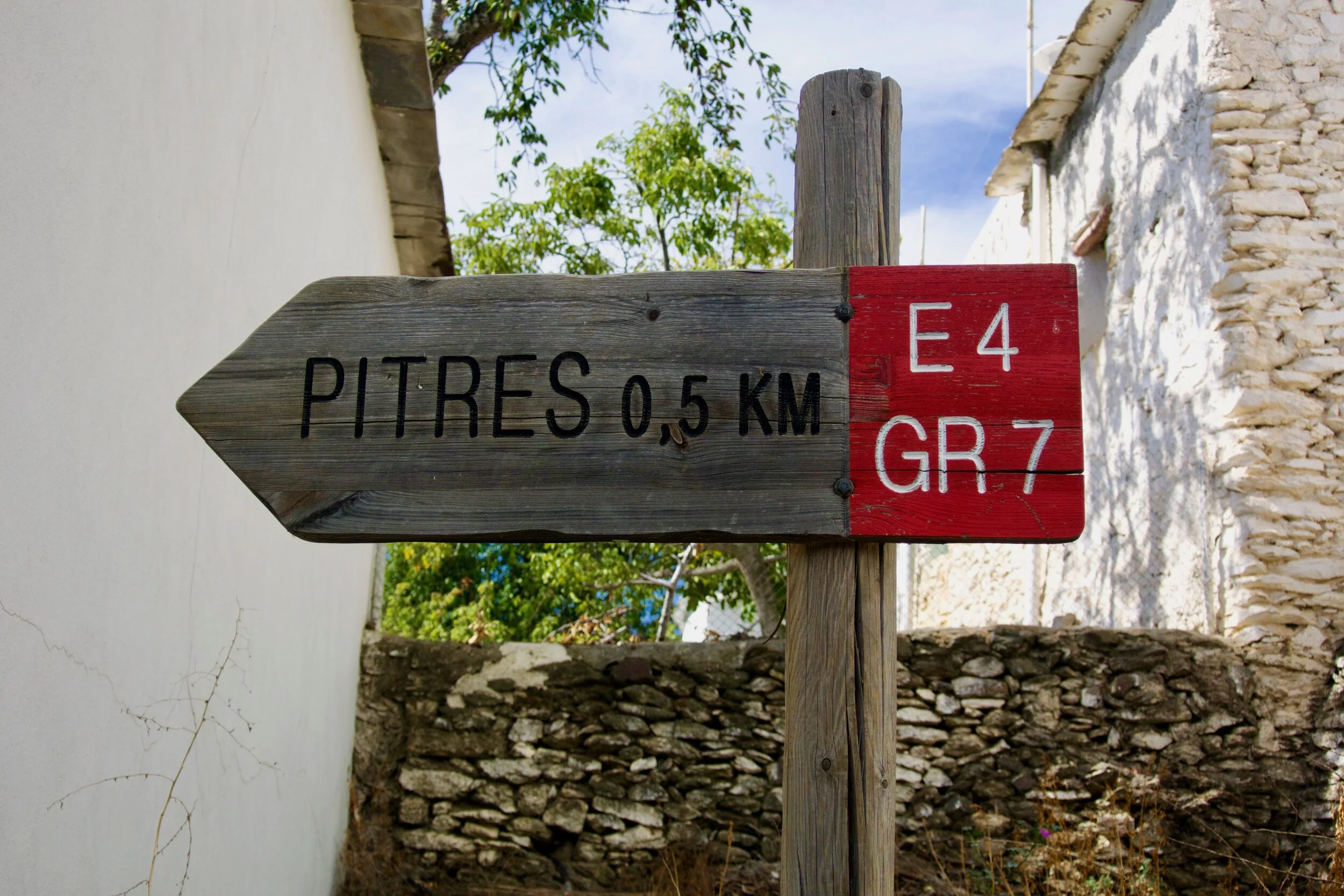
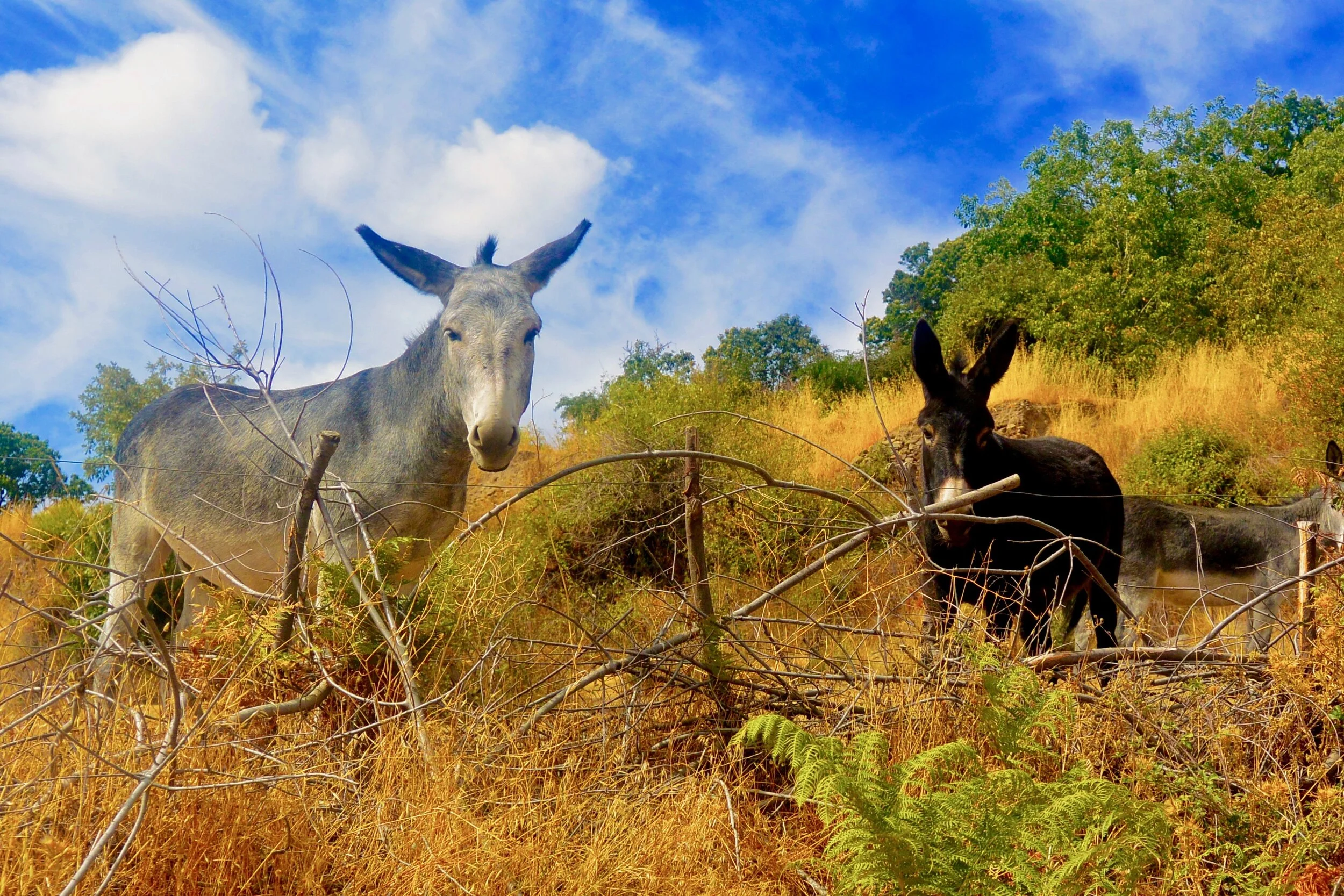
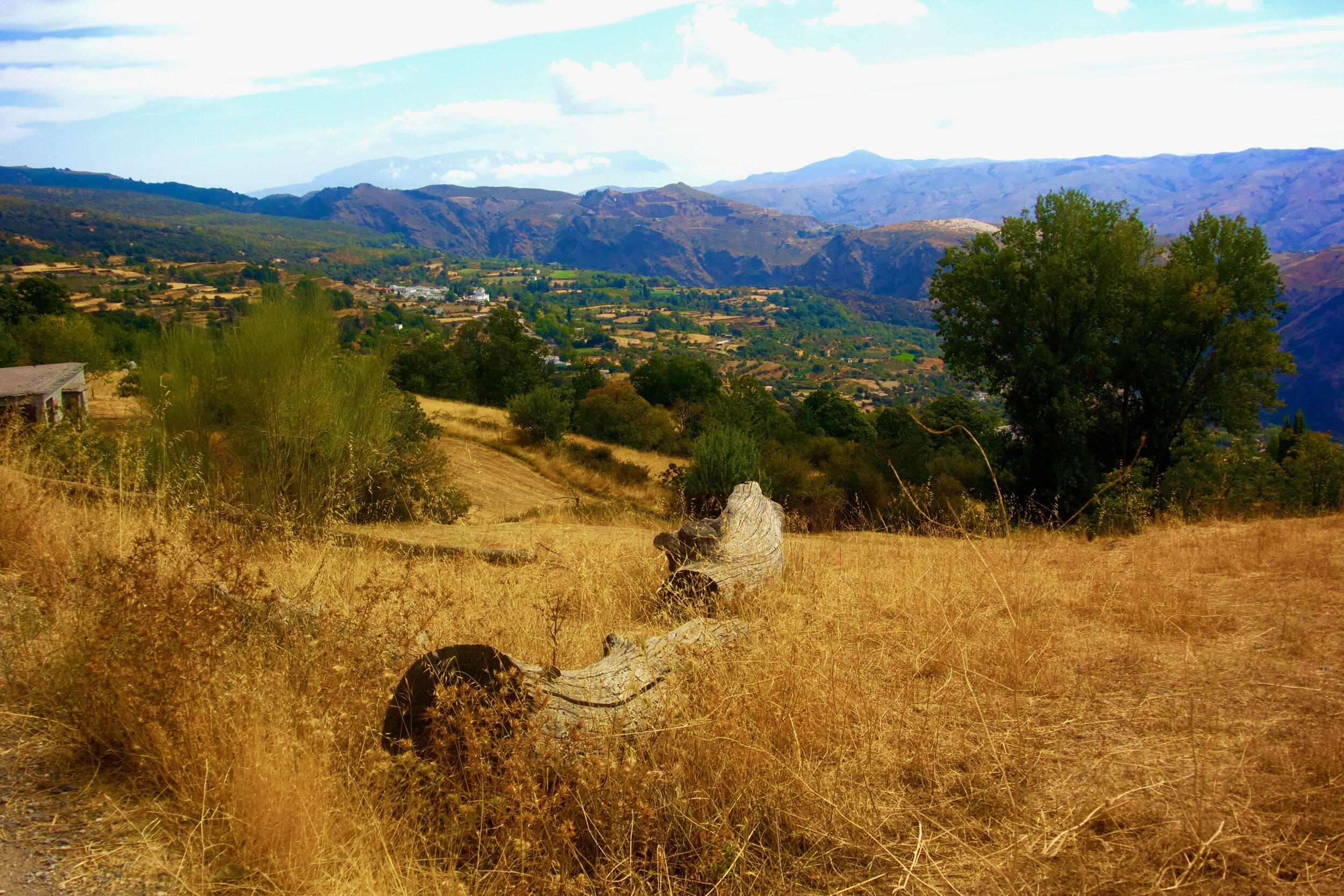
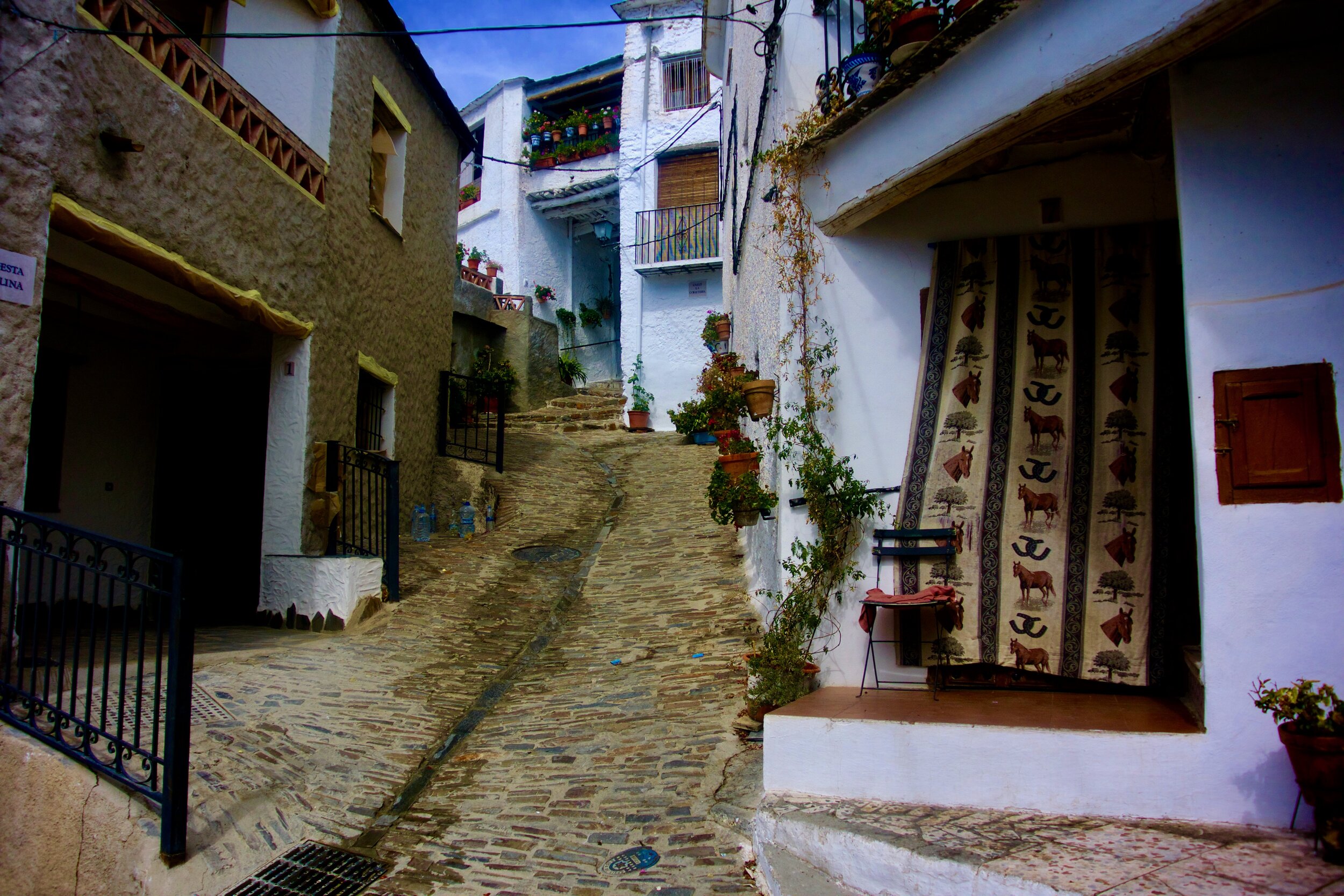
The village of Capileira, the second highest village in Spain and a fine example of the pueblo blanco.
Mulhacén is the highest mountain on the Spanish mainland at a height of 11,411 feet. The mountain forms part of the Sierra Nevada Range, and it was named after Muley Hacen, the Muslim King of Granada in the 15th Century. Mount Mulhacén is the world’s sixty-fourth most prominent mountain and Europe’s highest peak outside the Alps. Mulhacén is a beautiful mountain and the south face is very easy to climb even for average climbers like ourselves. From here we could see the beautiful view of the highest peaks on the southern side of the Sierra Nevada and its surrounding mountains. On very clear days it is even possible to see the Mediterranean Sea. The climb up the Mulhacén can be done in just one day if one uses the route through the village of Capileira. We met our trail guide, Jose, a retired art dealer from Amsterdam, who would guide us to the summit and take us to the trail head which is about half an hour minibus drive up winding dirt roads from the village of Capileira.
Once we started the ascent, the treeless views become more and more astounding and clearly show the altitude we were at. The photography spots were countless and scenic places to eat our lunch were everywhere. We travelled on footpaths and across fields and along rocky roads that ran through fields of wildflowers and out again into forgotten pastures. Located high up in the mountains, countless small villages representing the traditional heartland of Andalusían heritage huddled round the local of churches. It was enough for us just to breath in the unfamiliar land with no intent but absorbing its textures, smells and sounds attacking our senses. We never knew what was going to impact us next on our approach to Mulhacén. Fields of wild thyme released a unique and fragrant shock into the mountain air as we climbed over the beloved Mediterranean herb. Then in an instant, a wave of clouds poured over the mountain peaks across the fields as the temperature plummeted by 10 degrees reminding us of how important it was to check the weather conditions before attempting such a climb.
Arriving at the top of Mulhacén, the top of Spain, all the struggling to walk the last kilometers was forgotten in an instance. As we approached the summit, just ahead of us, the Ejército de Tierra (the ground army) of the Spanish Armed Forces and one of the oldest active armies dating back to the 15th century was celebrating their climb of the more difficult North face with a photo on the summit marker.
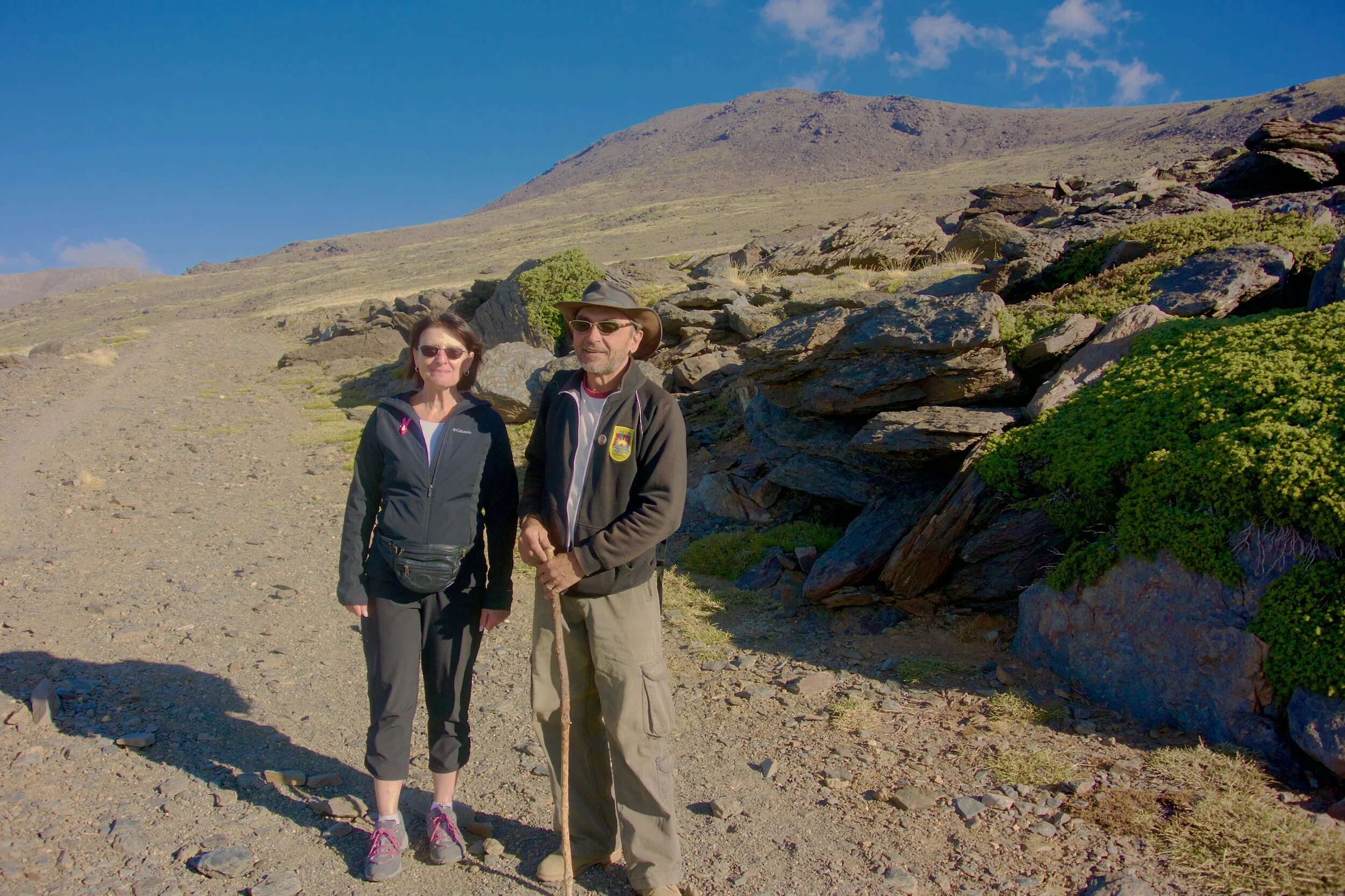
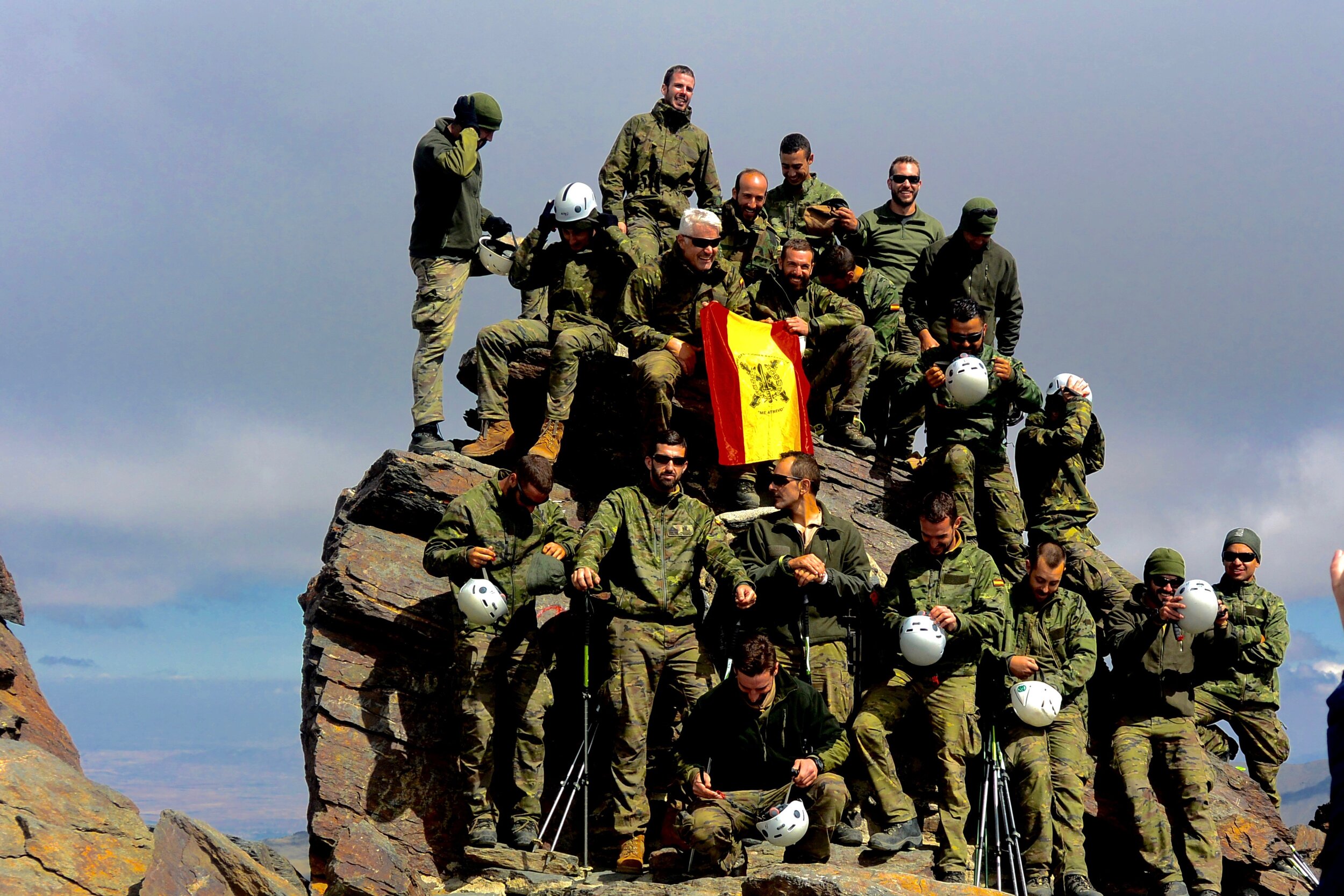
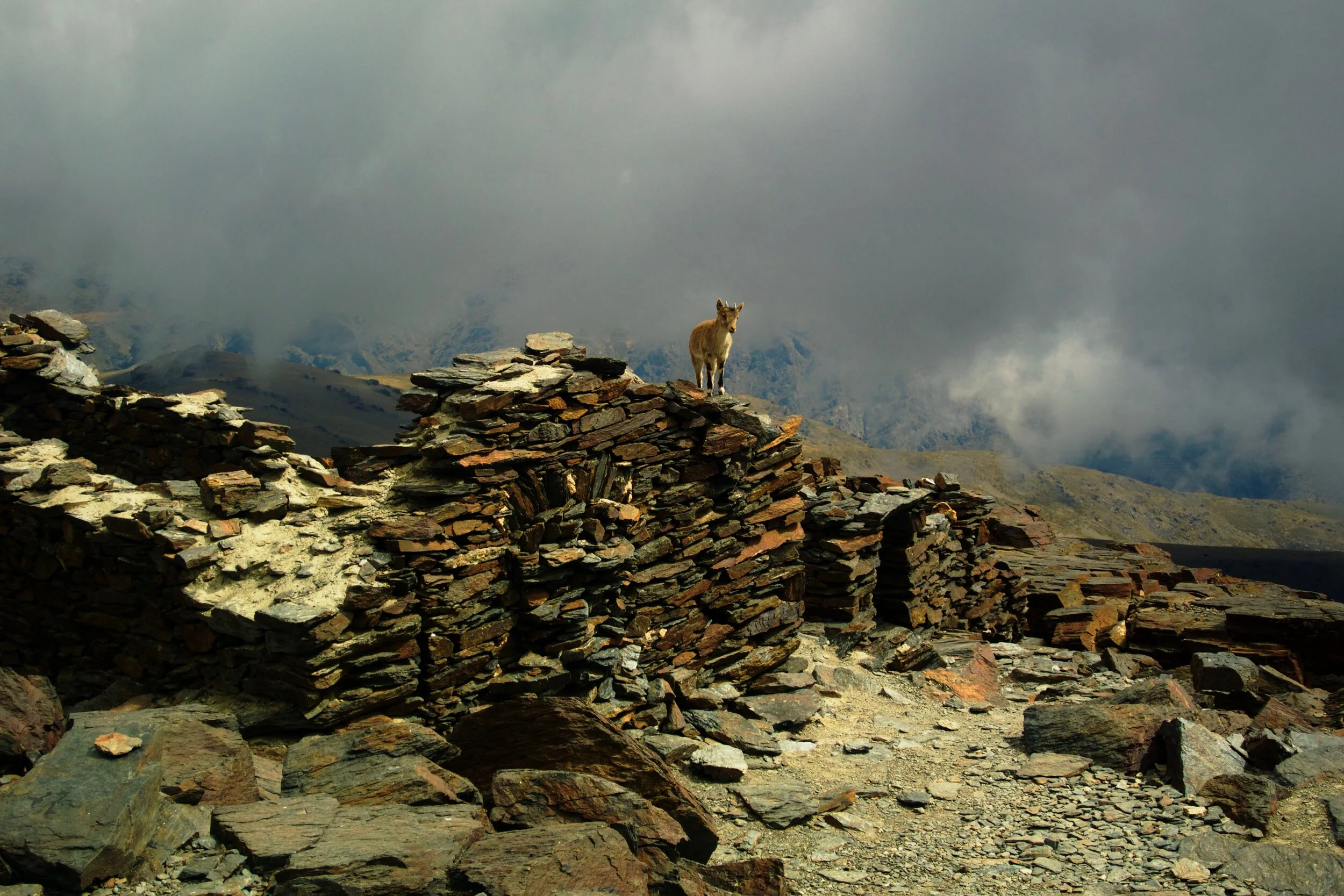
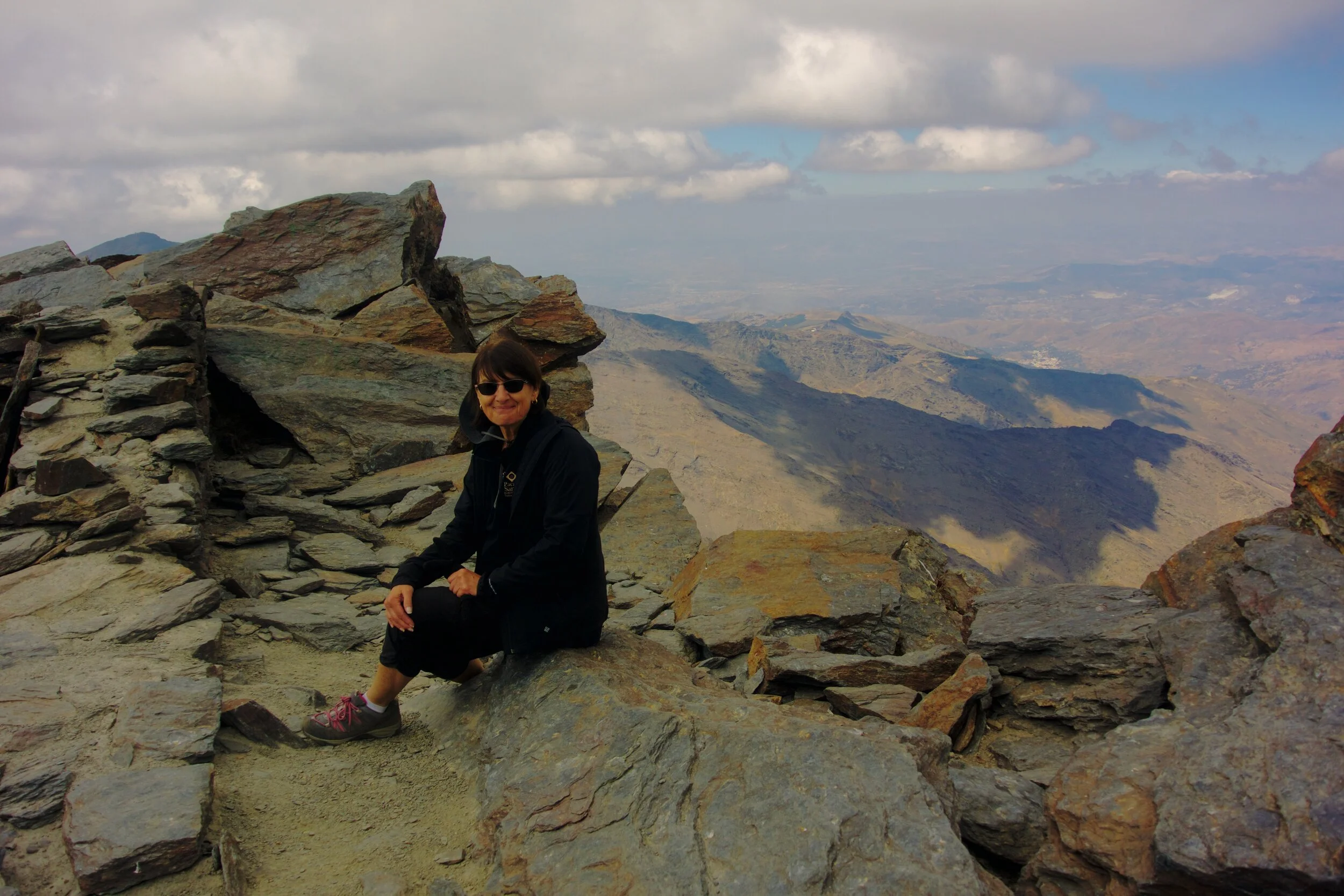
Our trail guide Jose, the Ejército de Tierra, an ibex and Sharon each posing on the Mulhacén summit.
The views of the surrounding mountain tops were mesmerizing and was simply not comparable to anything else we had experienced. Jose, our trail guide said, ‘When I stand by this trail with my Spanish counterparts, I feel like a link in a very, very long chain. Our country is finally changing from a caterpillar to a butterfly, like filling new wine into old bottles’.
Hiking Mulhacén was an amazing experience, however, it can be a tough hike if you’re not physically prepared for it. The climb up the steep part of the mountain can be hard and it’s also difficult if you’re scared of heights. The summit has some steep and fairly dangerous edges, so we had to be careful where we ventured, especially on a such a windy day. We felt it was for this that we’d come, to look out on a world for which we had no words. Walking alone through the great empty landscape and conquering another mountain top, our third and highest, was like an artist adding new layers of paint to an old picture. The sun had now risen high overhead and the fields of wildflowers were bathed in a golden light, standing together their petals glittering, stooped under the grazing ibex. We wandered the fields back to our pickup location, where the dung of the mountain goats lay there thick as the seeds of exotic pepper.
We drove from Granada detouring to the south coast and headed east to the countryside of the breathtaking Costa del Azahar, ‘The Orange Blossom Coast’. On the horizon, a line of ruined walls appeared to us like an apparition. In the heat and haze, they seem to hover above the ground. As you stroll through streets filled with orange and lemon groves your nose will tell you why this coast deserves its name. Oranges were brought to the Mediterranean around the 15th century, along with other citrus fruits, it played an important role as global trade expanded helping ship’s crews to stave off scurvy. Sailors planted citrus trees along the coasts of their voyage routes aiding in the trade and spread of oranges around the world. Once a sleepy fishing village, Nerja is one of the few places to have kept its traditional charm, with whitewashed houses and narrow streets. The village’s original design with nine streets and nine avenues organized around an elegant Spanish square has remained unchanged. A few blocks from the main road could have been anywhere, Guatemala, India even a thousand years back, it was a very humble simple life. But one could see the old relationship between host and visitor inevitably had been corrupted and cheapened by tourism, like the death of a friendship. The streets were called after names we hardly knew how to say, pledging liberty to roam and where Dylan’s ‘Mozambique’ jangled in the cavernousness asking, ‘when are you coming home?’
That kind of exploitive tourism was familiar to us, there was nothing about it that needed to be explained. It wasn’t about the tragedy it was about how this small community responded to their tragedy. By day their condition seemed somewhat less intolerable. They presented a cheerful face to the world even the beggars claimed pride of belonging. Barefoot gitano’s wearing iridescent saris in bright shades of orange, green, or pink, with their delicate silver anklets tinkling as they passed by. Cyclones of barefooted women strolled the length of the street, sloshing jars of water and furrily squalling “Agua! Agua!” Ragged little girls would raise their thin brown arms and dance rapturously at the least excuse for the tourists. It was a town of traditional joy where gaiety was almost a civic duty, something that the rich and poor wore with arrogant finesse, simply because the rest of Spain expected it of them. They were forced into carefree excesses compelled to flounce and swagger as the embodiment of Andalucía like theatrical decorations, painted to charm the eye. When people step out from behind the scenery, they were by definition actors, performing a play for the tourists’ entertainment and their money.
But when it was noon away from the tourist area, almost everyone was under cover in a restaurant and mostly shaded café tables. At this hour, the town properly came into its own. The storekeepers knew when to close their shutters against the sun, which was the habit in most other Spanish villages. But here it had reached a particular level of genius. Cheap and affectionately run in whose traditional shade, the men of the village spent half of their waking time. When you enter into one of the villages oldest areas, the cobbled streets thrum with the sounds of residence enjoying the tang of shellfish on wine-soaked wood. There is no waiting, no crowding and the place is all yours to listen to the news, that is much older than the wine. Like arriving at a feast that never ends. Ordering was like pressing the play button to an elaborate show, a piece of choreography, a slow dance. The lamps don’t match, nor do the glasses, but it didn’t matter as men stand at ease with their goblets of Albariño wine and plenty of time to drink it. While piled around the counters, lay banquets of seafood. Craggy oysters, crabs, calamari, heaped in golden rings, fresh lobsters, bowls of mussels and feathery shrimps twitching on beds of ice. Also, on offer would be sizzling sauces, for sausages and fried squid, snails, hot prawns in garlic, stewed pork or a shank of lamb. Nobody drank without eating. It would have been thought uncivilized and may have been one of the reasons that no one would get drunk. But then this seafood was some of the best in the world. Freshly gathered that morning from the friendly shore of the Mediterranean Sea.
That’s how we remembered it, terra cotta roofs, esparto curtains, a proliferation of caves along the seashore with men sipping on their wine, fastidiously pealing a prawn, biting into the sweet flesh of a lobster tasting the living brine of half-forgotten seas. The serge of conversation continued like the bubbling of water under the framed pictures of famous fishing vessels. It was a way of life buried away from the burning sky. Wine was lightly taxed here and there were no licensing laws and under such conditions one could take one’s time. ‘Sobremesa’ was the time you spend at the table after you’ve finished eating. There is no equivalent word in English. Even so, the apparent belief in balancing hard work with “el dulce no haciendo nada”, the sweetness of doing nothing, always struck us as something else to savor and perhaps no other village we visited at that time had so successfully come to terms with this particular priority of pleasure. Summer was in the air, our bodies in the heat, just Sharon and I sitting by the coast, today we belong by the sea. As we drove back to Sevilla, we thought our most lasting impression was still the unhurried dignity the Spaniard’s handled their wine. Drink for them was one of the natural privileges of living rather than the temporary suicide it was for the many hordes of tourists.
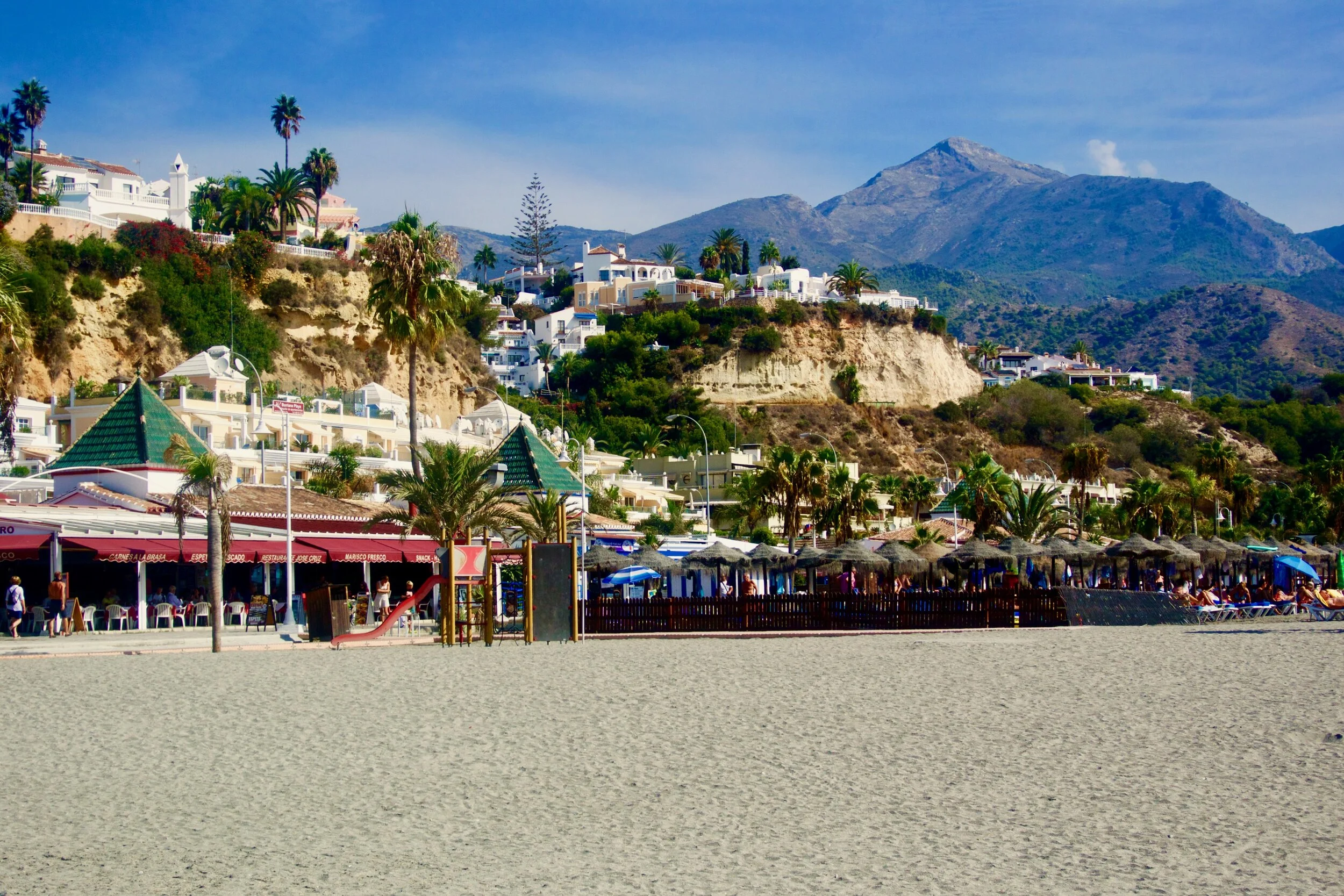
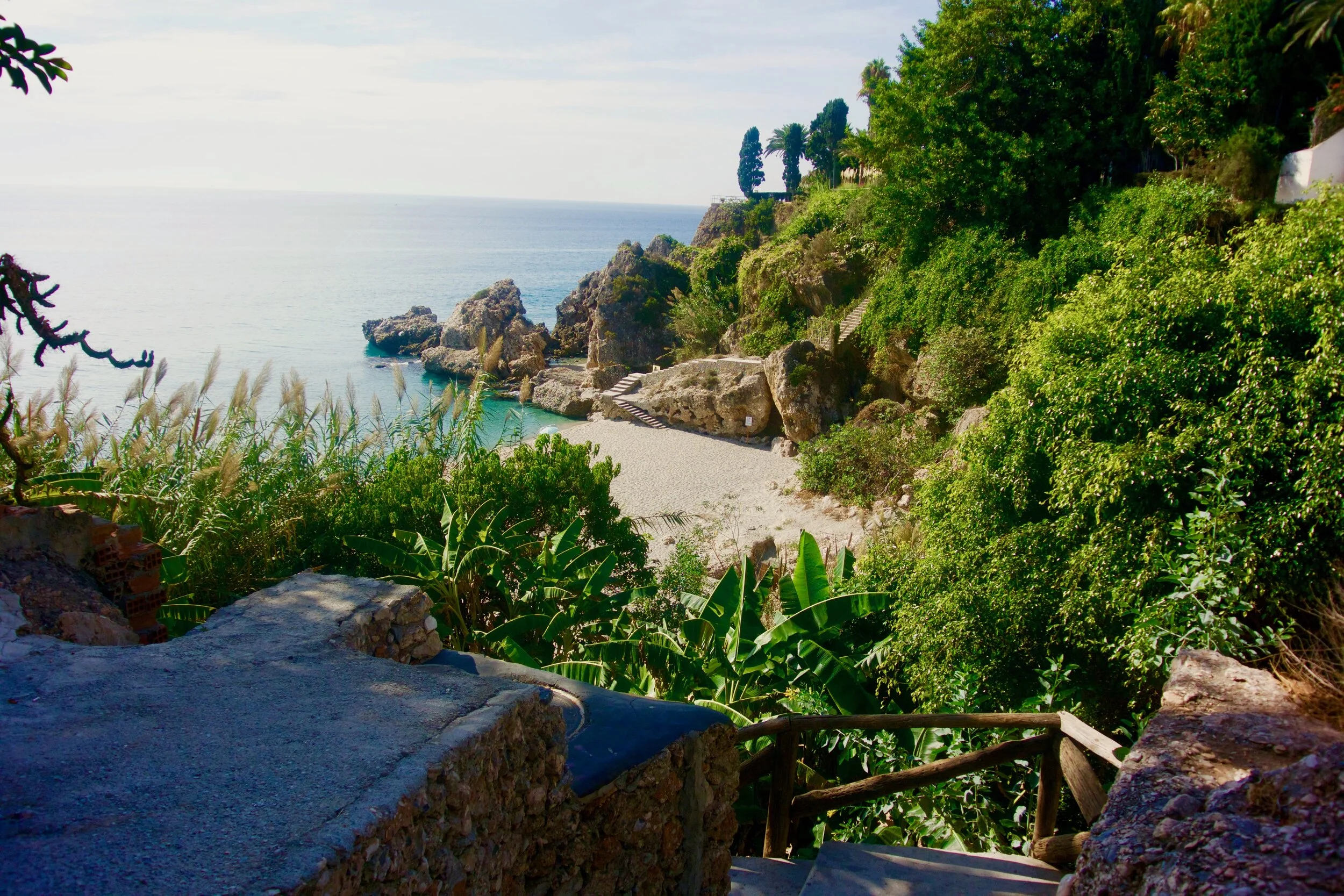
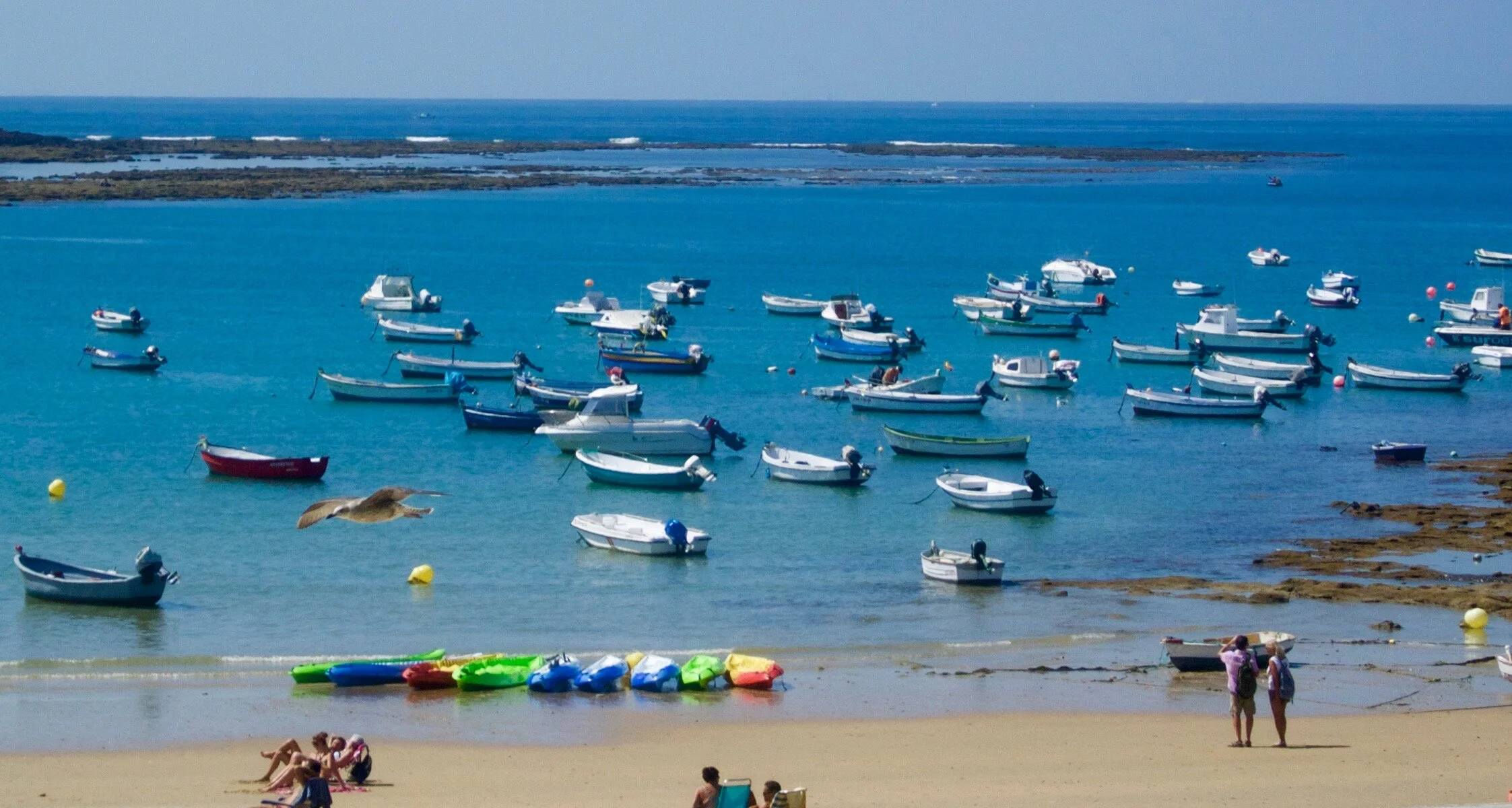
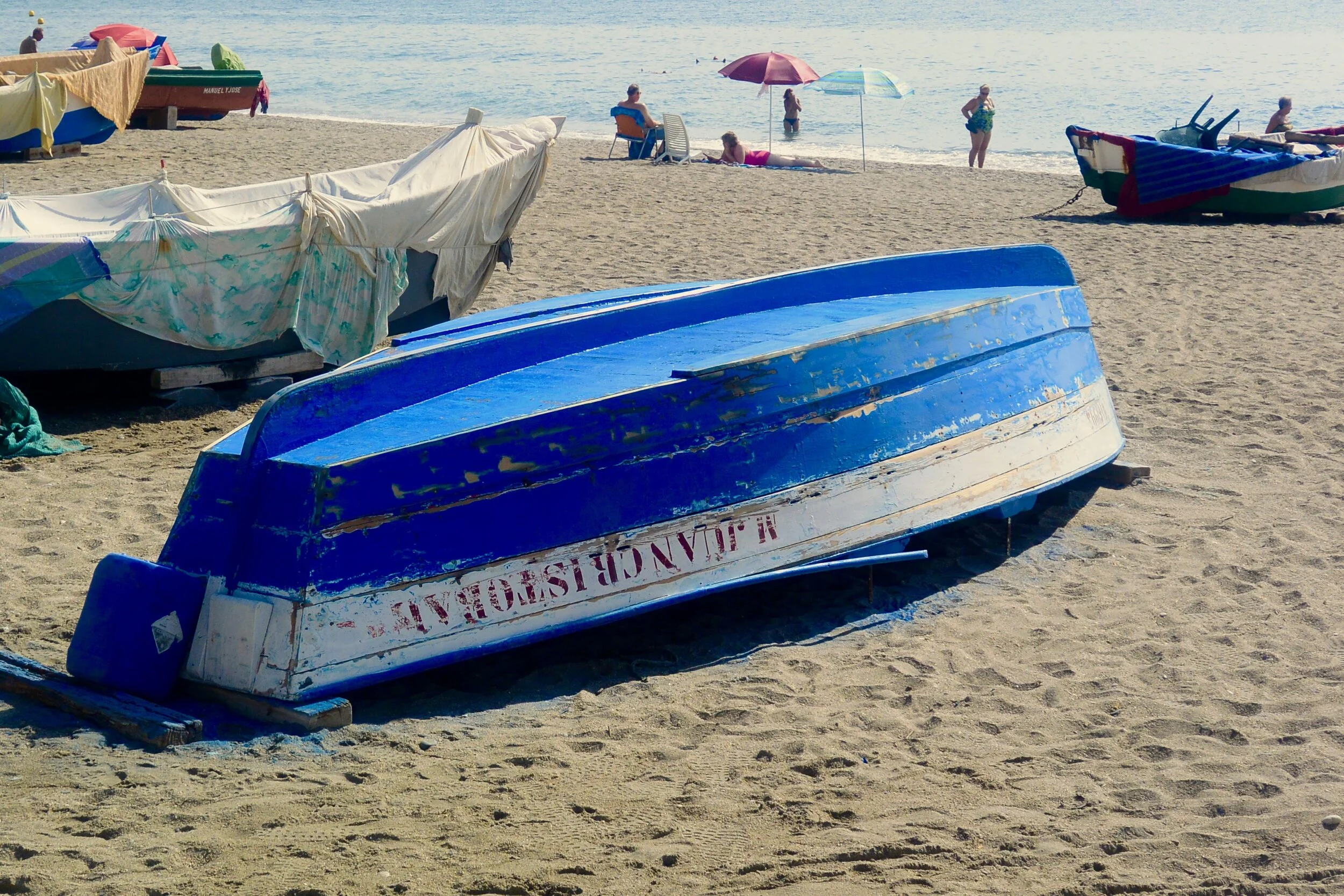
Beautiful Village of Nerja on The Orange Blossom Coast
We had booked our accommodations at The Hotel Casa Imperial in Sevilla, which was truly a hidden gem concealed behind huge medieval wooden doors on a narrow-cobbled street in Santa Cruz barrio. We were blown away by the beauty of the building which had charming patios and terraces that gave the sense of being in a secret garden. The atrium opened up before us, filled with leafy plants and a central fountain, surrounded by white and yellow pillared archways. A third atrium houses a small decorative pool and stone stairways edged with colorful tiles. We were in absolute awe of the orange trees. Oranges so abundant they even grew on the trees lining the streets. Seeing such colourful, fruitful trees was a wonder to our eyes. There was something so uplifting about seeing brightly colored ripe oranges dangling above our heads while walking through the streets of Sevilla.
The Spanish phrase “mi media naranja” means my half-orange and is used to describe one’s sweetheart, one’s beautifully perfect other half. There's a story that a pair of lovers are like an orange, and at birth the orange is cut in half, people must go through life looking for the other half of their orange. With this perfect metaphor in mind, Sharon and I began preparing for our spa afternoon at Aire-Sevilla and an evening of entertainment at the la Bienal D flamenco festival held on the patio de la Montería courtyard in the Alcázar palace for our final night.
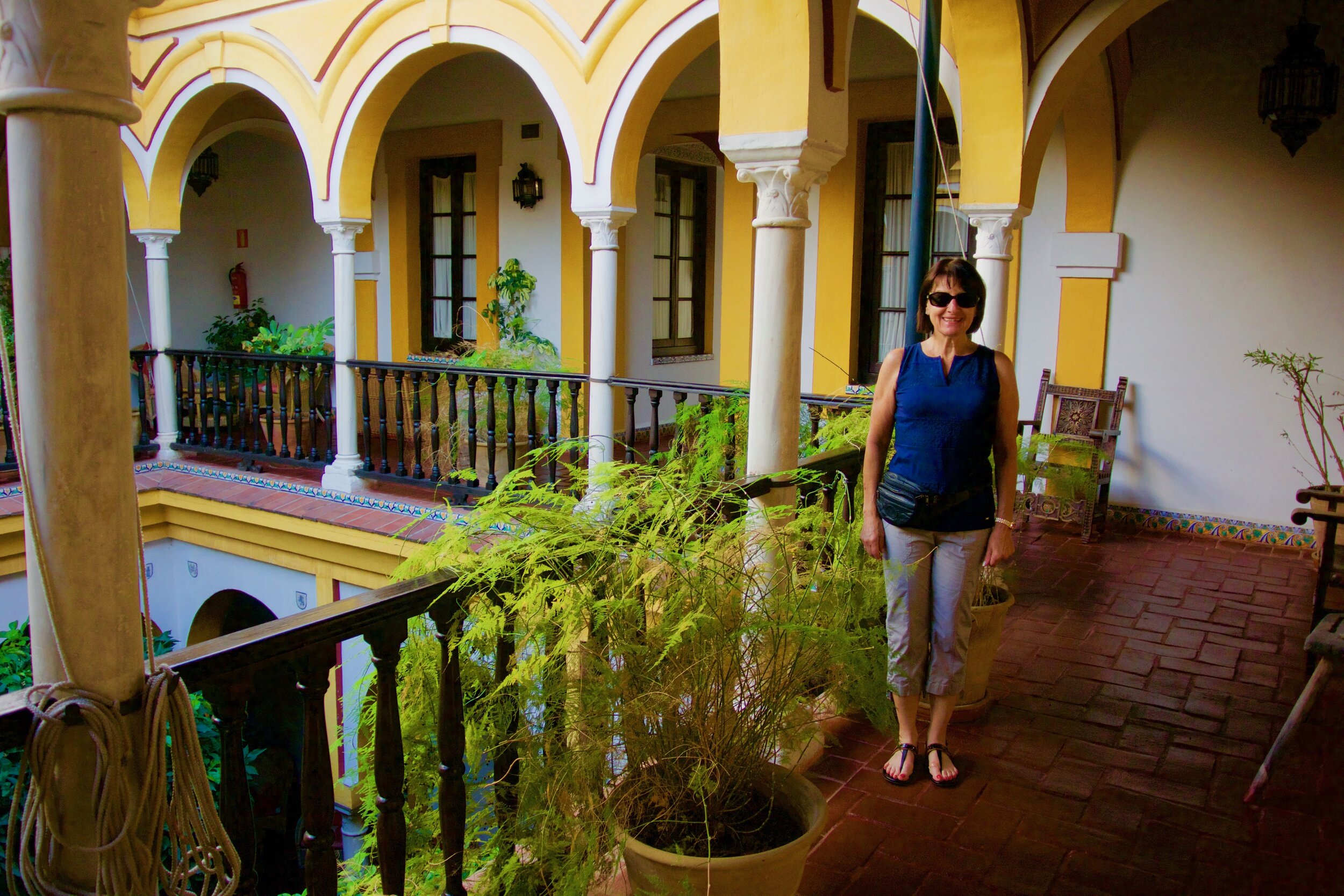
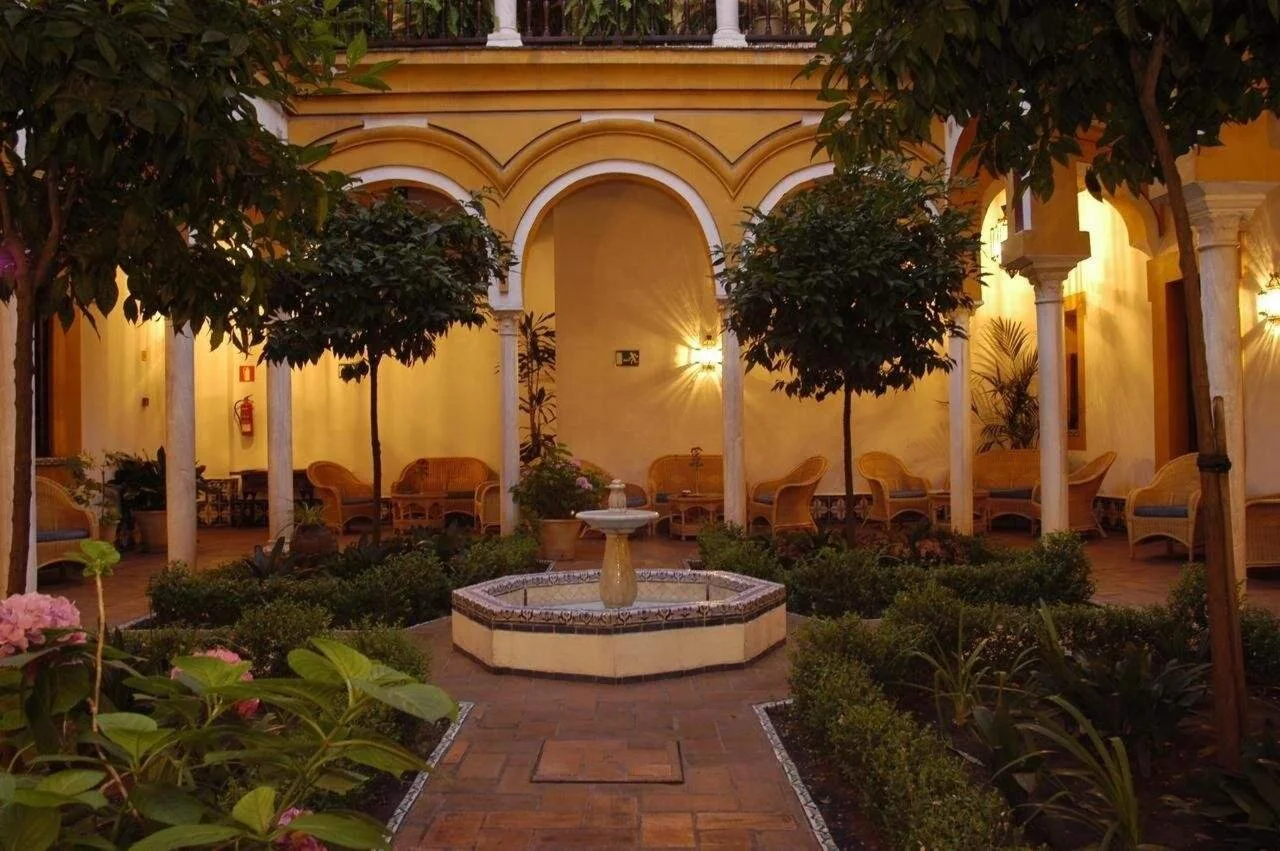
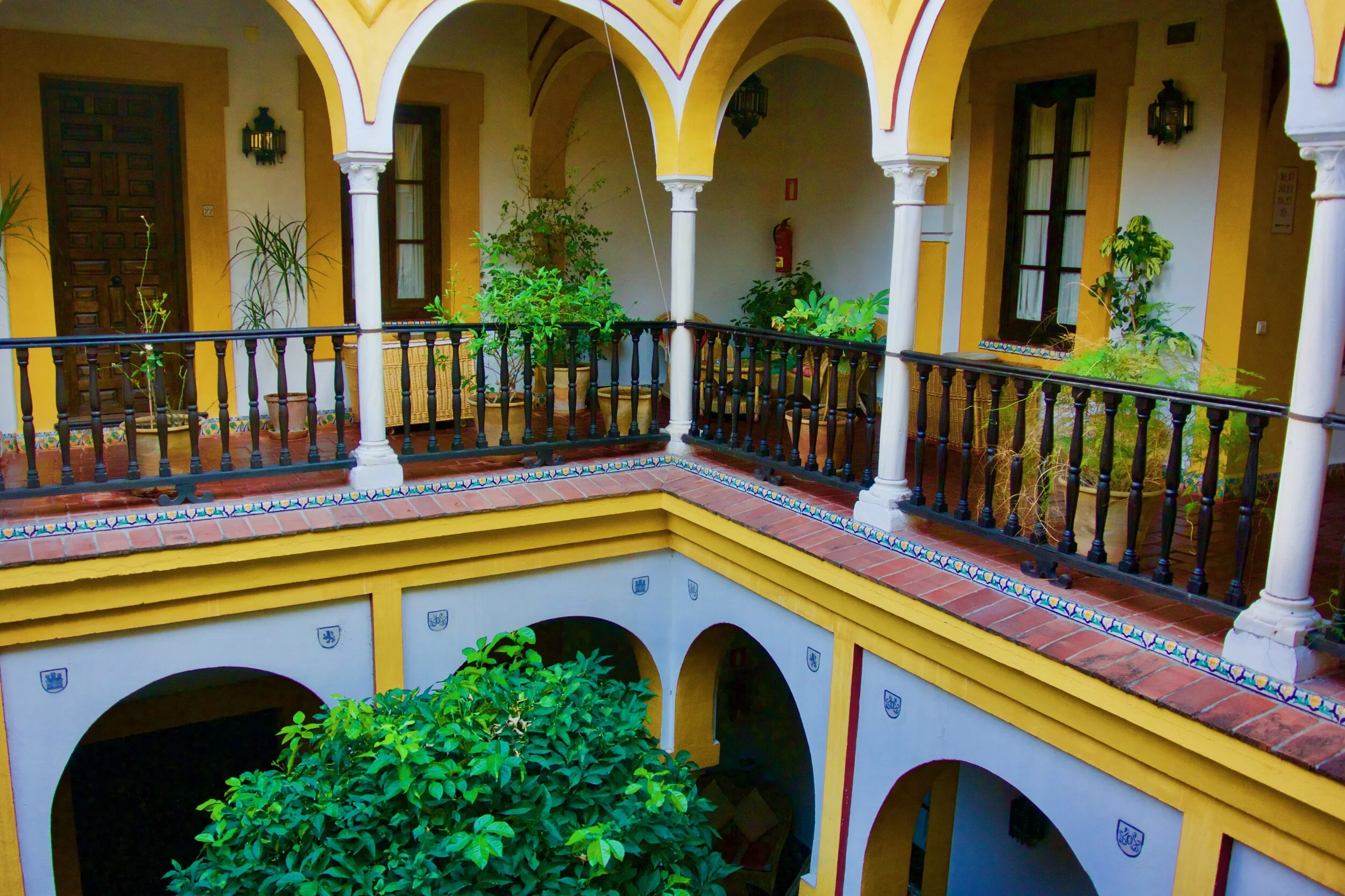
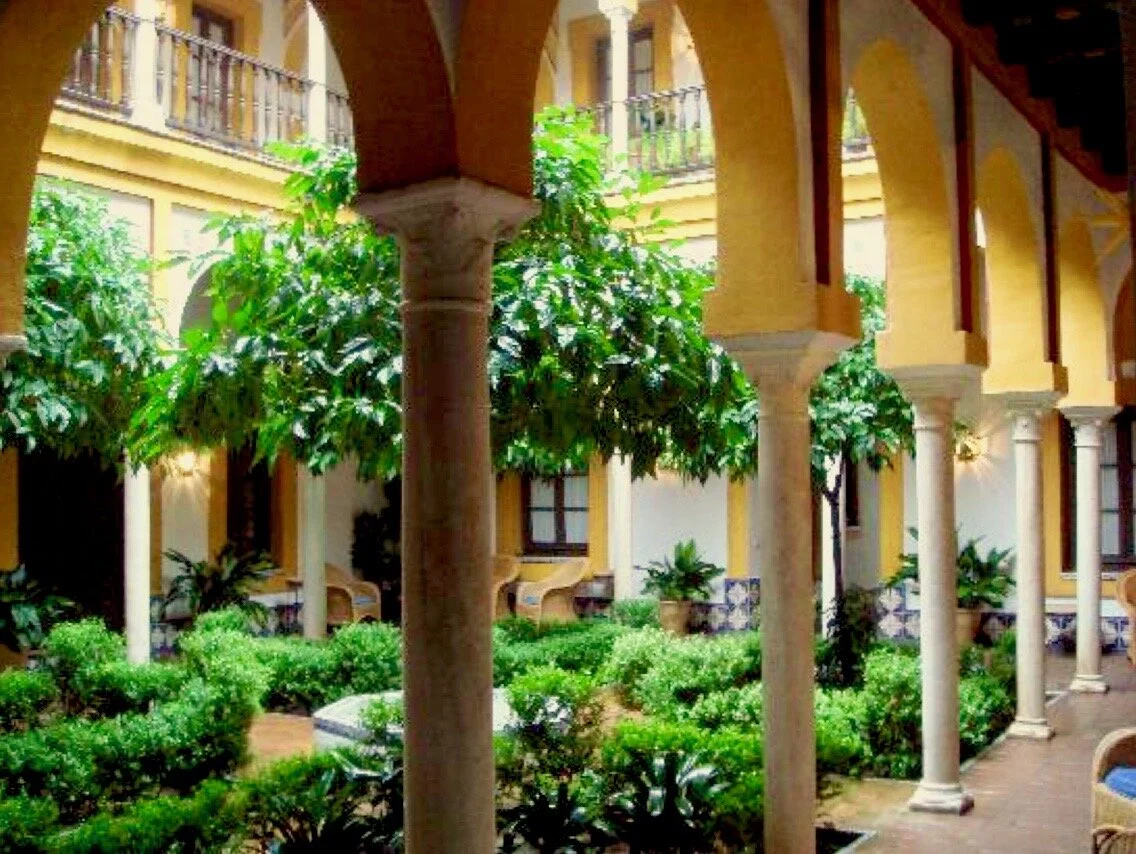
Casa Imperial Hotel, Sevilla
The old town center sits at the highest point, with streets of whitewashed homes cascading down the ridgeline. Motor traffic flows are limited into the old town leaving the town’s labyrinth to be explored peacefully on foot through narrow streets and alleys that run out from the plaza just a few steps away from Sevilla cathedral, in an alley named Aire in the neighborhood of Santa Cruz, we found AIRE-Sevilla, a magnificent Mudéjar-style palace that embraces more than five centuries of history. As soon as we stepped in the Andaluz-style courtyard, we started a journey through sensations that took us by candlelight across the various bath rooms with water at different temperature ranges, distributed throughout the palace followed by a relaxing massage and cool down with fruit and juices.
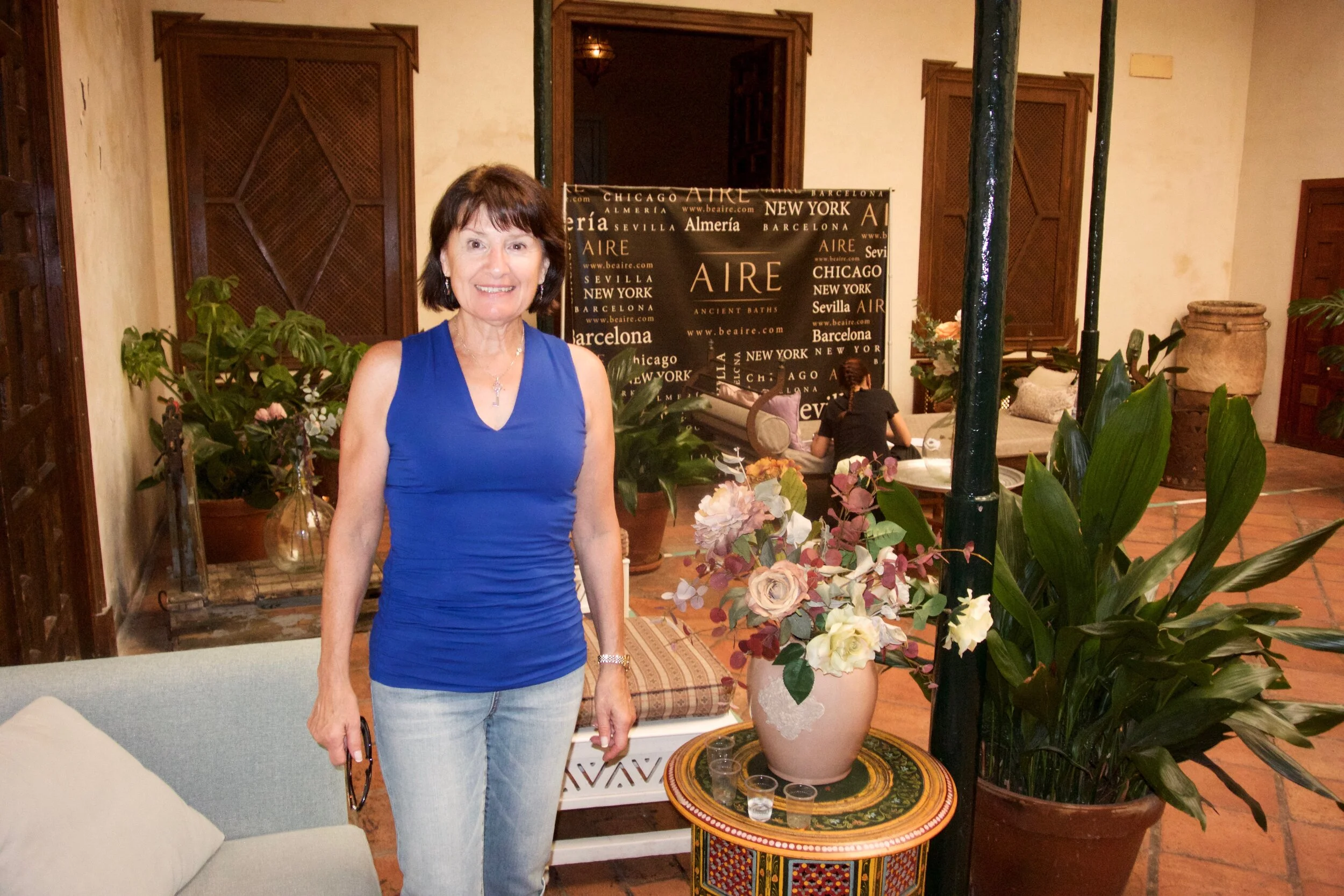
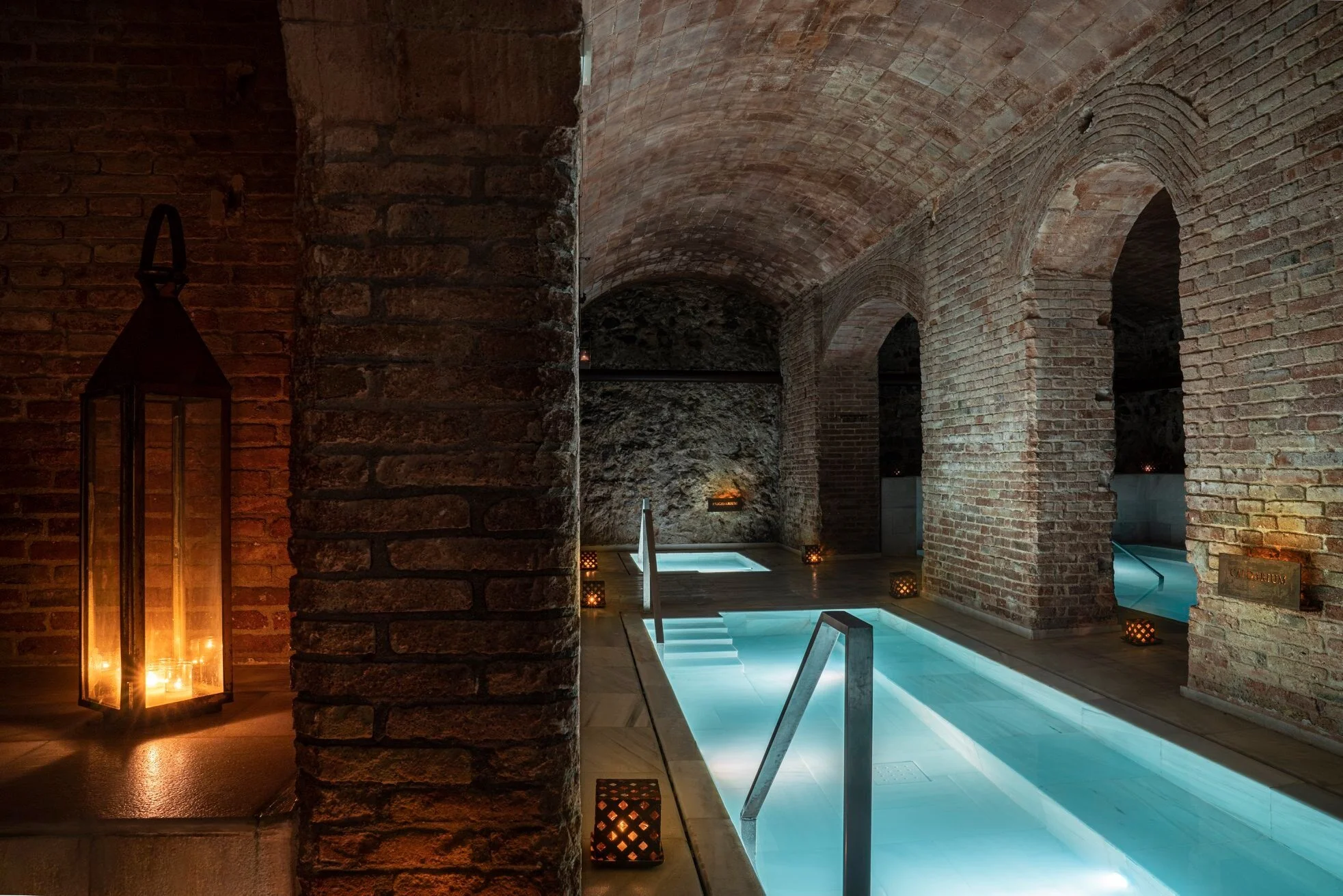
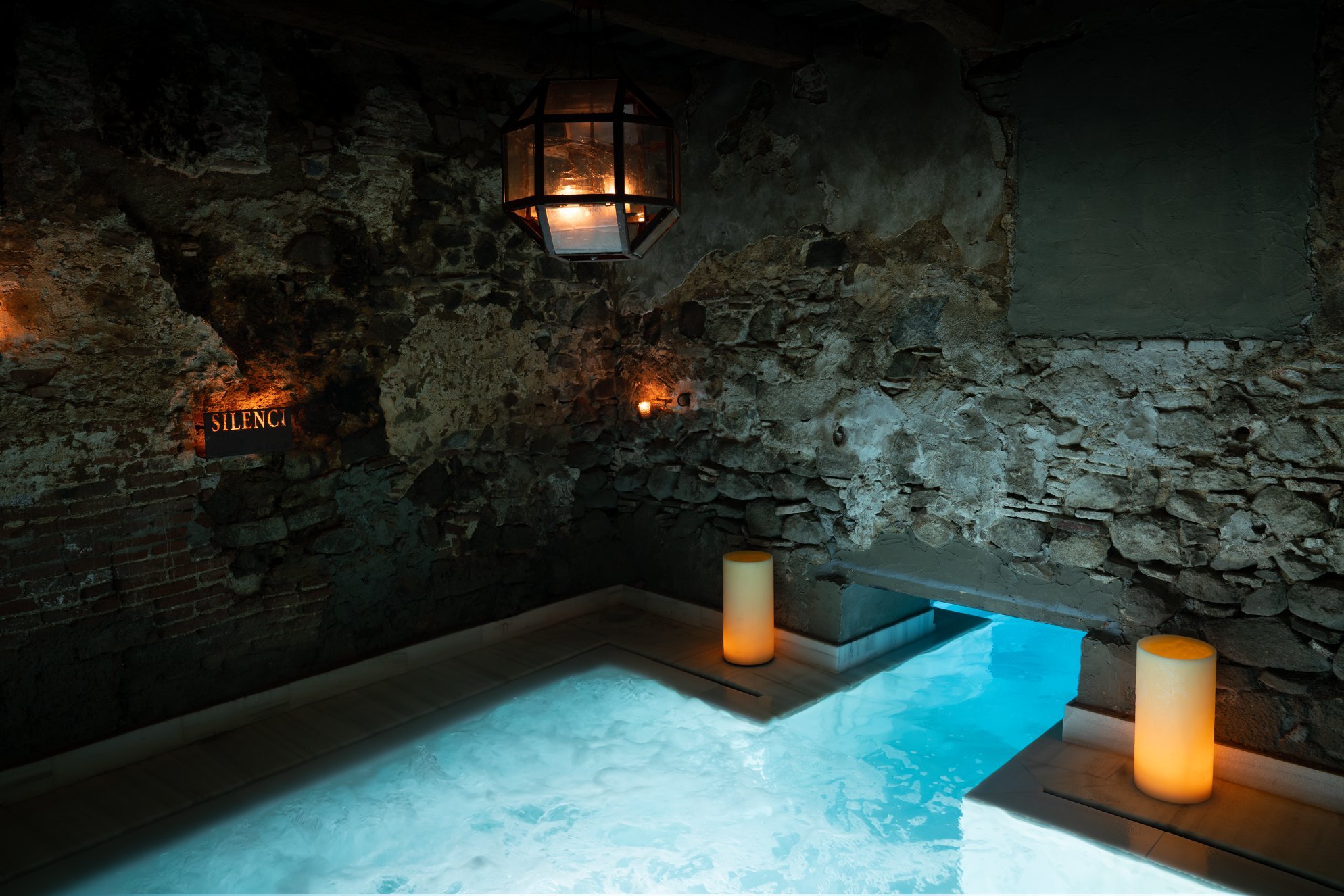
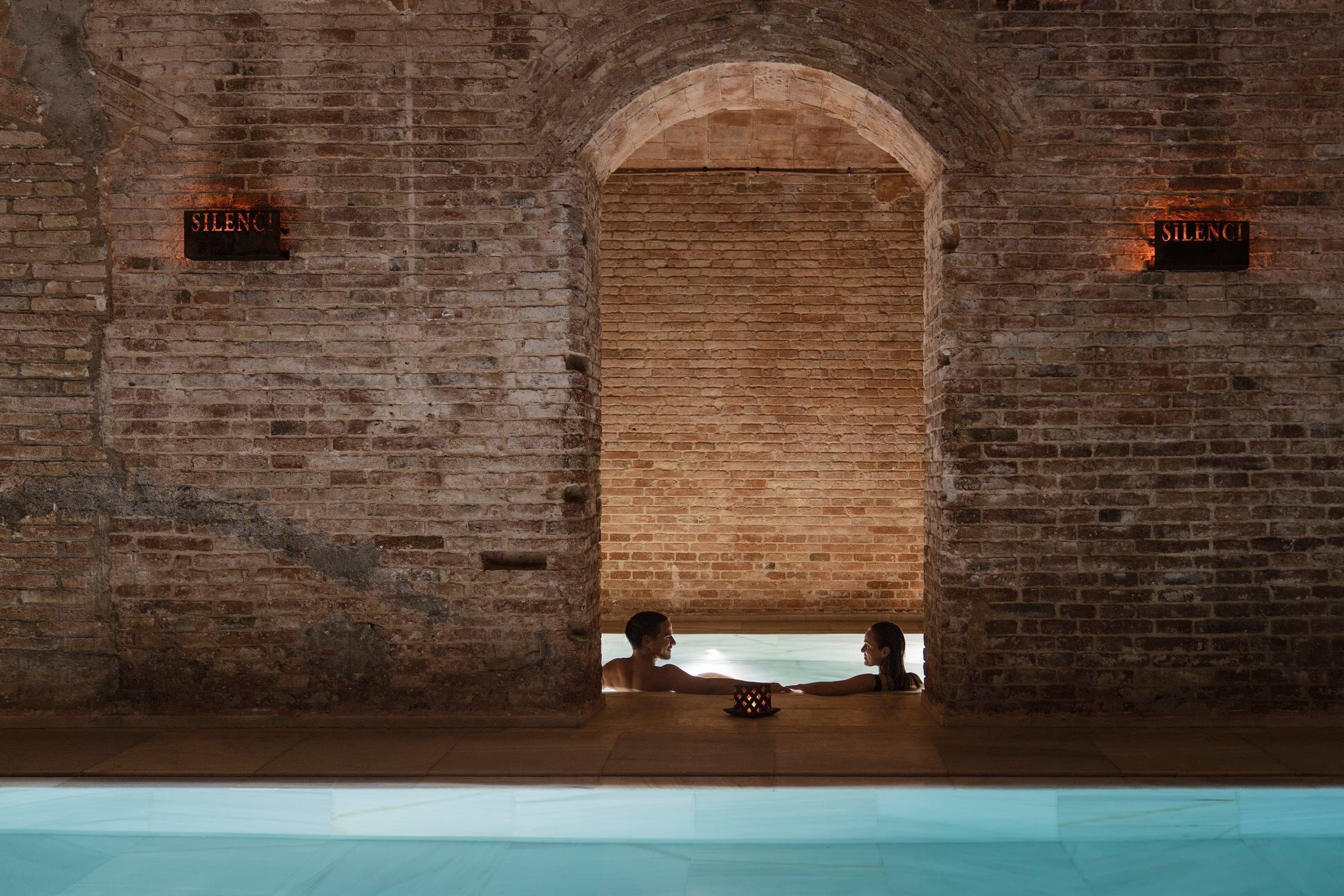
Sharon posing in the lobby at Aire, photos of the pools are taken from the website as photos are not permitted inside
Floating out from the spa, the streets fell in subtle shades of multicoloured stone, offset by gentle interplays of light and shadow adding to our amazing feeling of relaxation. We immediately felt a strange sense of continuity of something that had not quite broken from the past, something that we soon recognized seemed to come through so deeply like the phantom whisper of gently rustling leaves. Navigating through the crowds to the town’s eastern end, it connected with another historic arcade that invited us to get lost. The arcade was a vibrant mix of orange, red, green, white and purple encroaching onto the market’s single narrow street appearing in two-dimensions like a Picasso work of art. There were spicy wafts of paella and the char-grilled aroma of eel skewers and eye-catching displays of fresh seafood, and ornately crafted sweets that sent buyers reaching into their pockets. There were also glimpses of how centuries of craftsmanship inspired new creations. Leatherware artisans used time-honored techniques to craft chic and ornate cell phone cases. Like so many places in Spain where old meets new, gifted locals discovered how old traditions could be used to forge something new.
At its heart was the sunbaked central square, this is a place to browse around the farmers' market or enjoy dinner. We sat outside the café Española and watched a few towns people go by, imbibing life, drinking it in. We were sitting in the big inner courtyard drinking G&T and watching the new moon. It was lit by table lamps and warm and did not look or feel like any other place we had been in Spain. The sky was dark blue with light behind it, not yet the real evening blackness. We had the place to ourselves and the silence made the evening faultless. We were not talking but basking in sensations of our skin. We could still feel the warm air now was soft on our arms and legs, the tiles of the paving hot under our bare feet. It’s wonderful to know exactly when you are happy.
Sultry, sensual flamenco is intrinsic in Sevilla. They say flamenco is a mix of dance, song and music. It originated somewhere close to Sevilla and most visitors take in a show at one of the many tablaos or even an amateur jaleo while in Sevilla. We were fortunate to have tickets to the most important international event within the Flamenco World, the Sevilla Bienal D Flamenco, all are left with no other choice but to wait two years for the next edition if they didn’t have a ticket. The artist line-up was at the height of any enthusiasts’ expectations, as guitar lovers we would revel in a multitude of songs and seductive flamenco performances. The history of the Sevilla Flamenco D Bienal is traced back to 1980 when the first edition took place between the Easter holidays and the Sevilla Fair (Feria de Abril). This evenings edition would be the 19th; an event that has evolved with the times in harmony with its mission to represent a diversity of perspectives that constantly develop within the flamenco world. We asked an old woman if she would be going to la Bienal. She smiled, grabbed a newspaper and pointed, “I’ve got four nieces dancing, they’re all as beautiful as angels.”
Flamenco dancers with their heads as still as a sprinter's, flowers in their hair and bright coloured dresses, shared a public camaraderie with the black suited guitarists and singers. The delicacy of the hands and mesmerizing quickness of the feet, the overwrought facial expressions and rapid shifts in tempo produce a performance in which the distance between ecstasy and agony was barely discernible. In spite of frequent bouts of exhaustion, they again launch into impromptu performances in a spontaneous expression of emotion that happened right in front of us and was different every time each performed. That’s what made it so exciting.
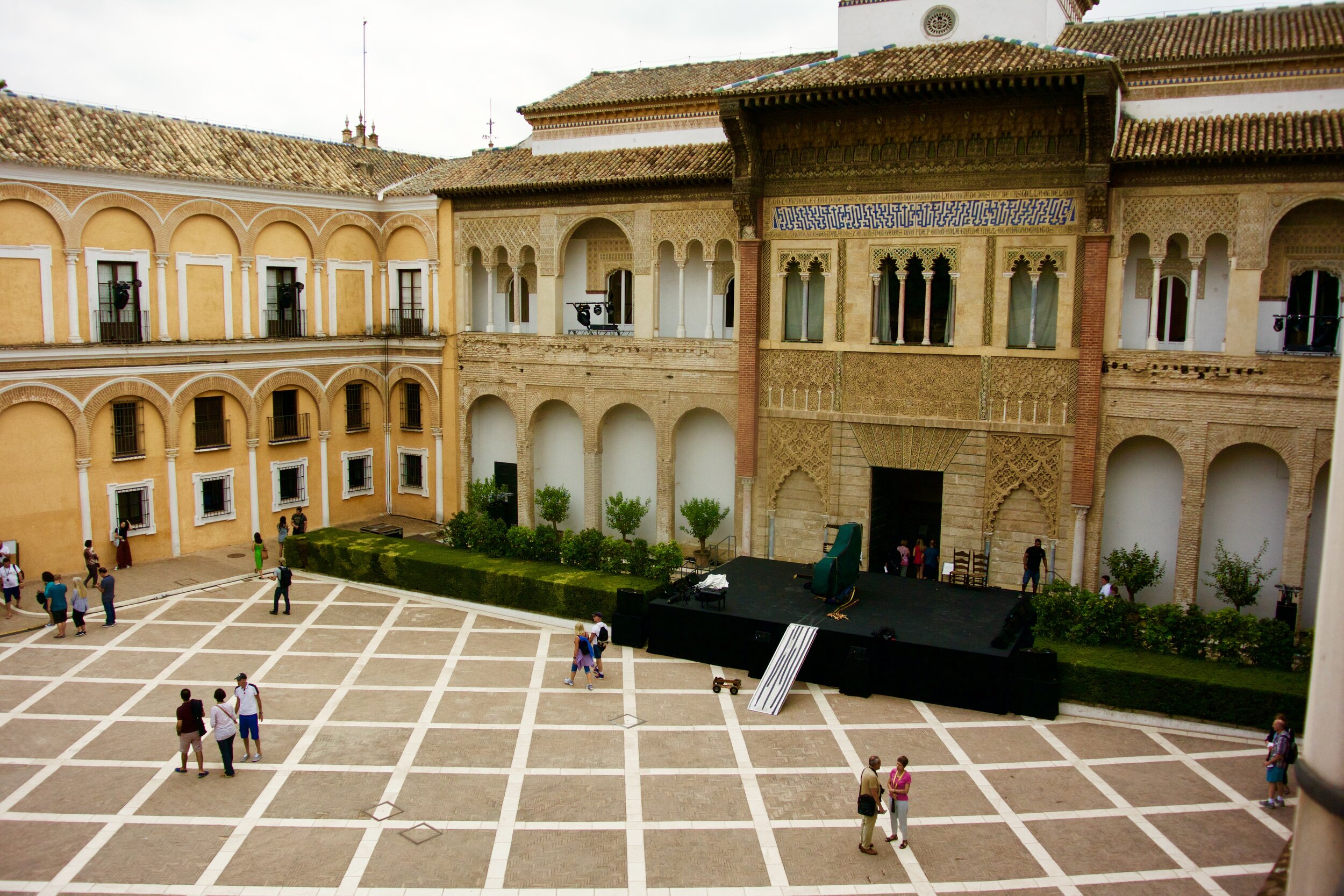
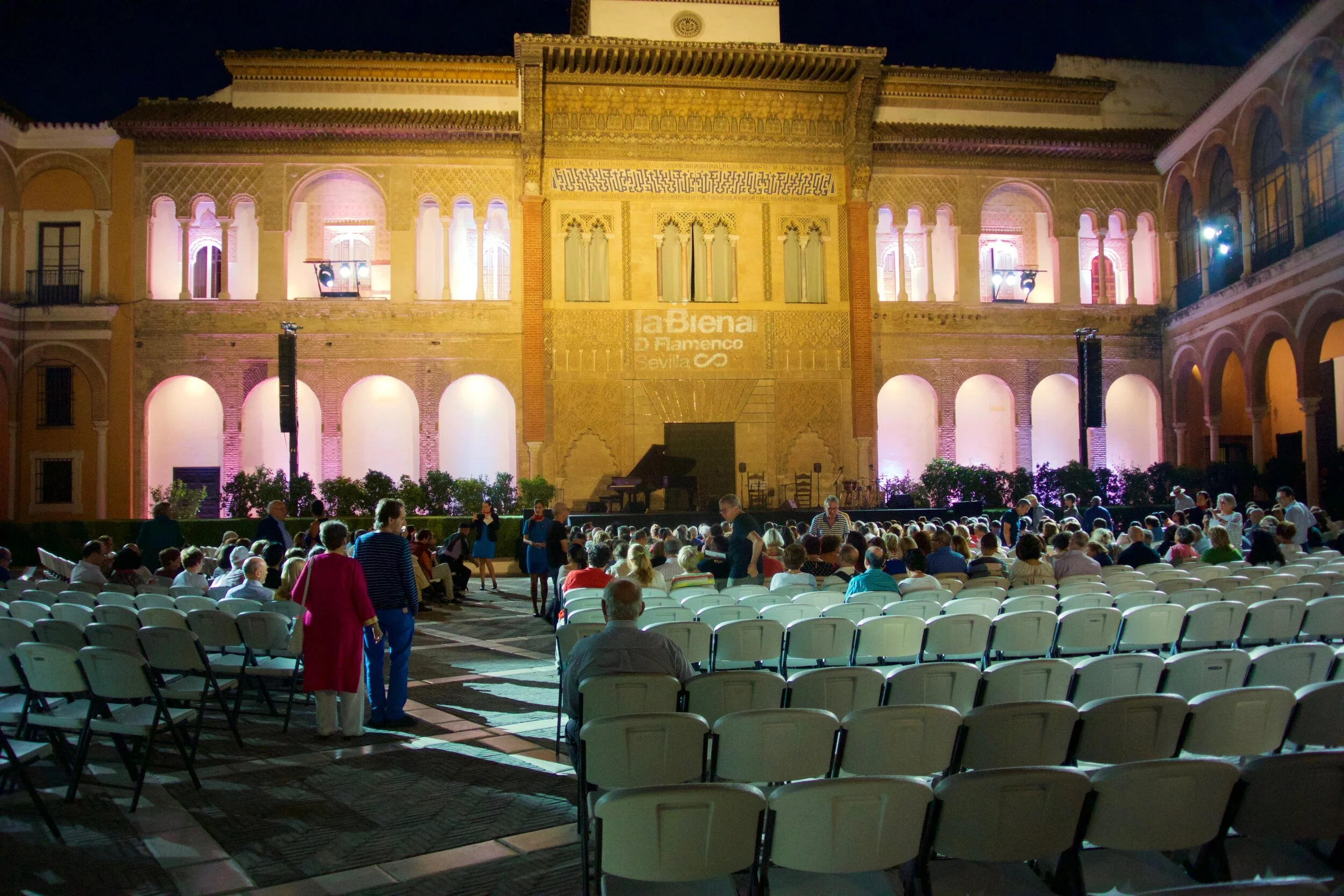
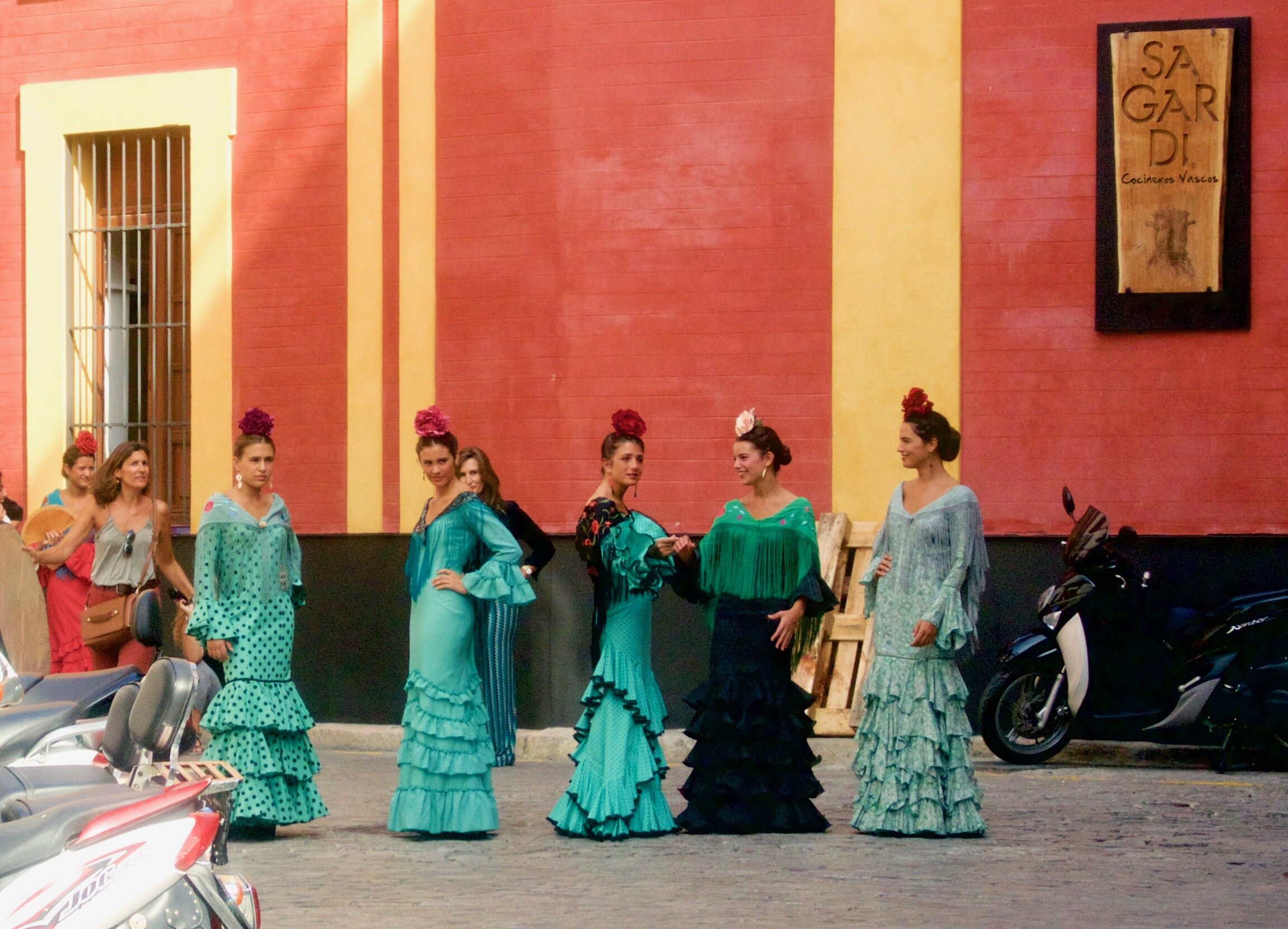
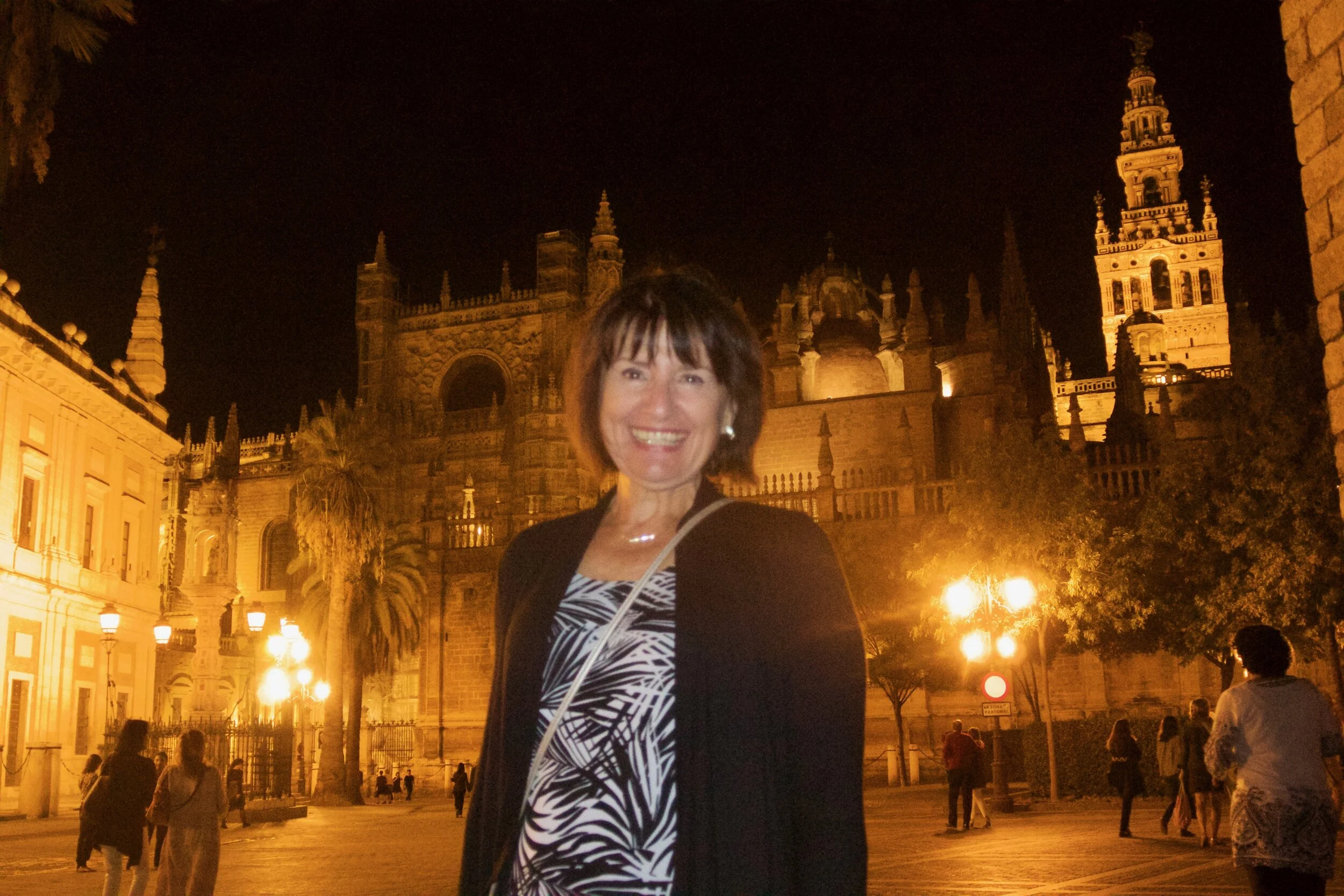
Setting up of La Bienal and view of the stage in the Patio de la Montería courtyard at the Alcázar in Sevilla. Stunning flamenco dancers waiting in the courtyard.
While walking to the Alcázar we were greeted by the heady scent of orange blossom. I think of oranges as being archetypal Spanish, but the Arabs brought them to Spain along with a mass of other fruits, because fruitfulness was one of the key features of their gardens. And when they are in flower the fragrance is stunning. Sevilla was drowning in the fragrance of the bitter orange trees that flood its sidewalks. The aroma was intoxicating, numbing the mind and the body's senses as we meandered its sweet-smelling streets amid the heavenly scent that made us completely transcend what was happening around us. The way that citrus was used en masse, citrus had grown up against walls, clipped tight citrus grown as hedges and the net effect of that was cool green, providing shade and calm beneath what can be an be an unbearably hot sun. The trees are planted in deeply sunken beds so that one can stand there looking down on them, so the fragrance is reaching you directly. The fruit as they ripen and appear, were there for us just to reach out and pluck. As we walked down the street, immediately the fragrance was astonishing and hit us with this beautiful bath of scent. We savoured the smell of oranges on our fingers, a fragrance that would forever remind us of the seclusion and the natural passage of time we peacefully enjoyed that day. Sharon poured a glass of orange wine as a light wind shook the mimosa trees beside us while we waited for la Bienal to begin.
After the performance, aromatic flavors hanging heavily in the night air set in motion our appetite for a short culinary adventure and ushered us toward a hidden corner in the old town behind the Iglesia Colegial del Divino Salvador. The tiny café had a view of the medieval square in front, its snug, low-arched rooms were cluttered with candlelit tables and offbeat folklore figurines. People came from all over town for its Spanish-style hot chocolate, which was so thick and rich, it could be eaten with a spoon. Marzipan is still made from almonds grown in the orchards that surrounded the town, a tradition begun by the Arabs when they introduced sugar palms to the region. Arabic was once a conduit between classical knowledge and western philosophy, but convivencia is looking increasingly shaky in modern-day Spain. There was once a time, when ''East was not separated from West, nor was Muslim from Jew or Christian''. That time offers an eternal message more relevant today than ever before.
Tea was also very much part of the culture in Andalucía and used widely. Earl Grey tea uses an extract of the bergamot orange, a hybrid of lemon and bitter orange, a perfect complement to the fresh local oranges Sharon had selected from a basket in the market that morning and reminiscent of Leonard Cohens hypnotic melody, Suzanne, which speaks to a romantic longing that, seemingly, remained unfulfilled “And you want to travel with her and you want to travel blind”… as “she feeds you tea and oranges.” Banging our hiking boots, we scattered the tiny birds unperceived deep within the confines of the trees and sat down at one of four tables in the courtyard. The significance of four was the ‘charbagh’, an order, proportion and a harmony, which underlies everything. We paused in the shady square called a ‘maidan’ to sip our brew. There was a circular fountain, a symbol of heaven and the square always a symbol of Earth with water the symbol of the soul. It was a meeting place of heaven and earth and the end of our Spanish journey.
So, where will we be going next, Sharon asked? Sipping on my tea I thought… tea! How about England? What rhymes with tea?
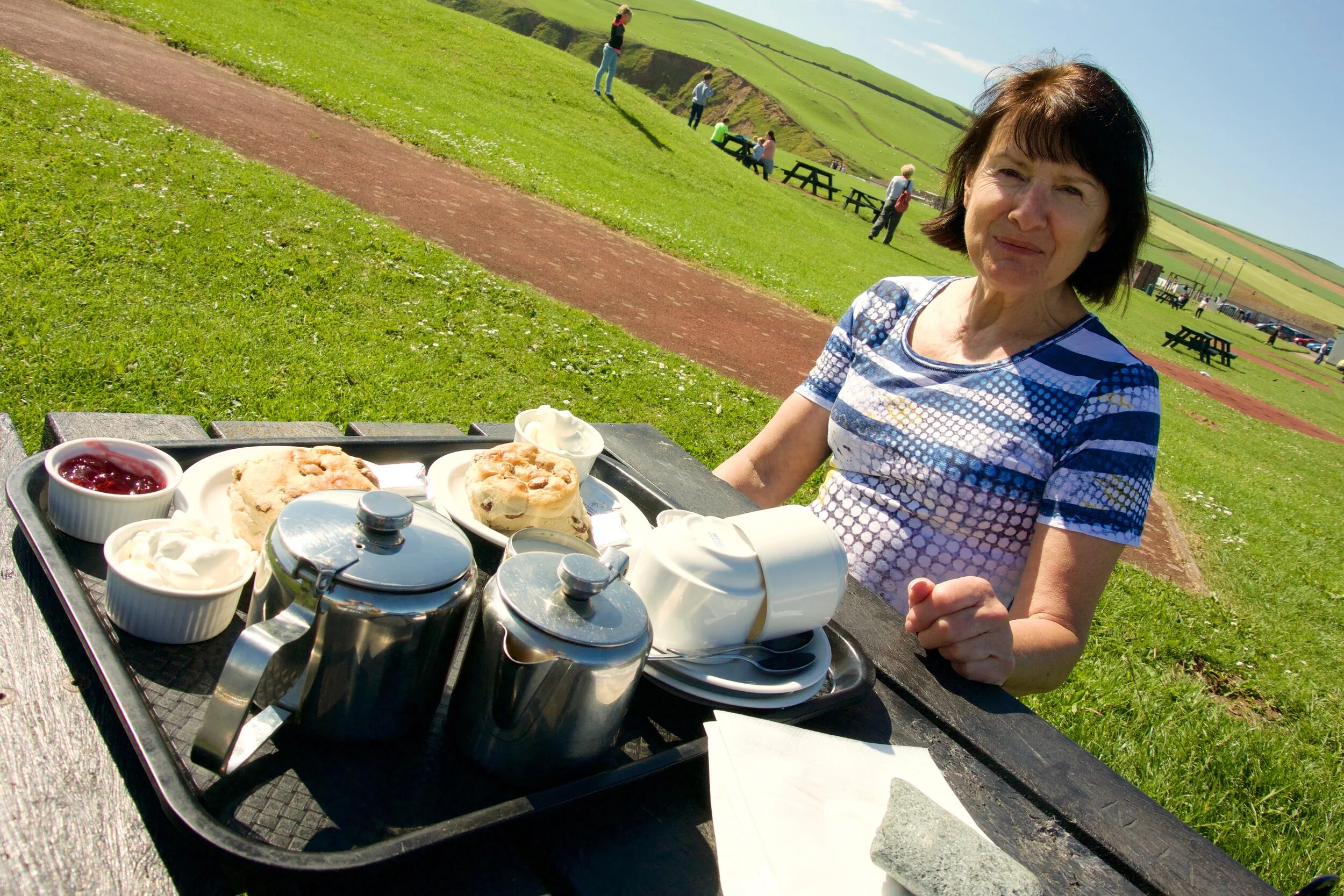
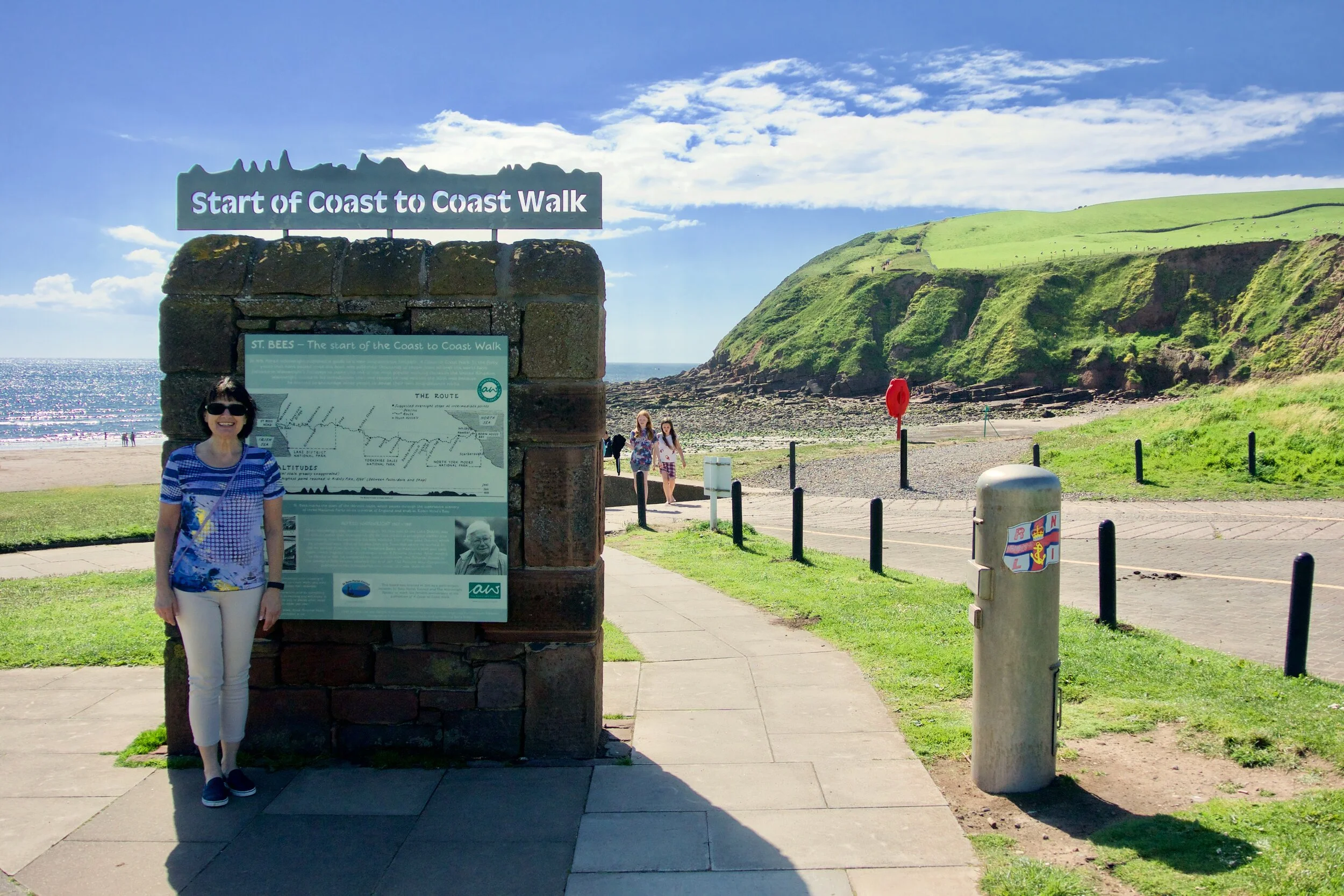

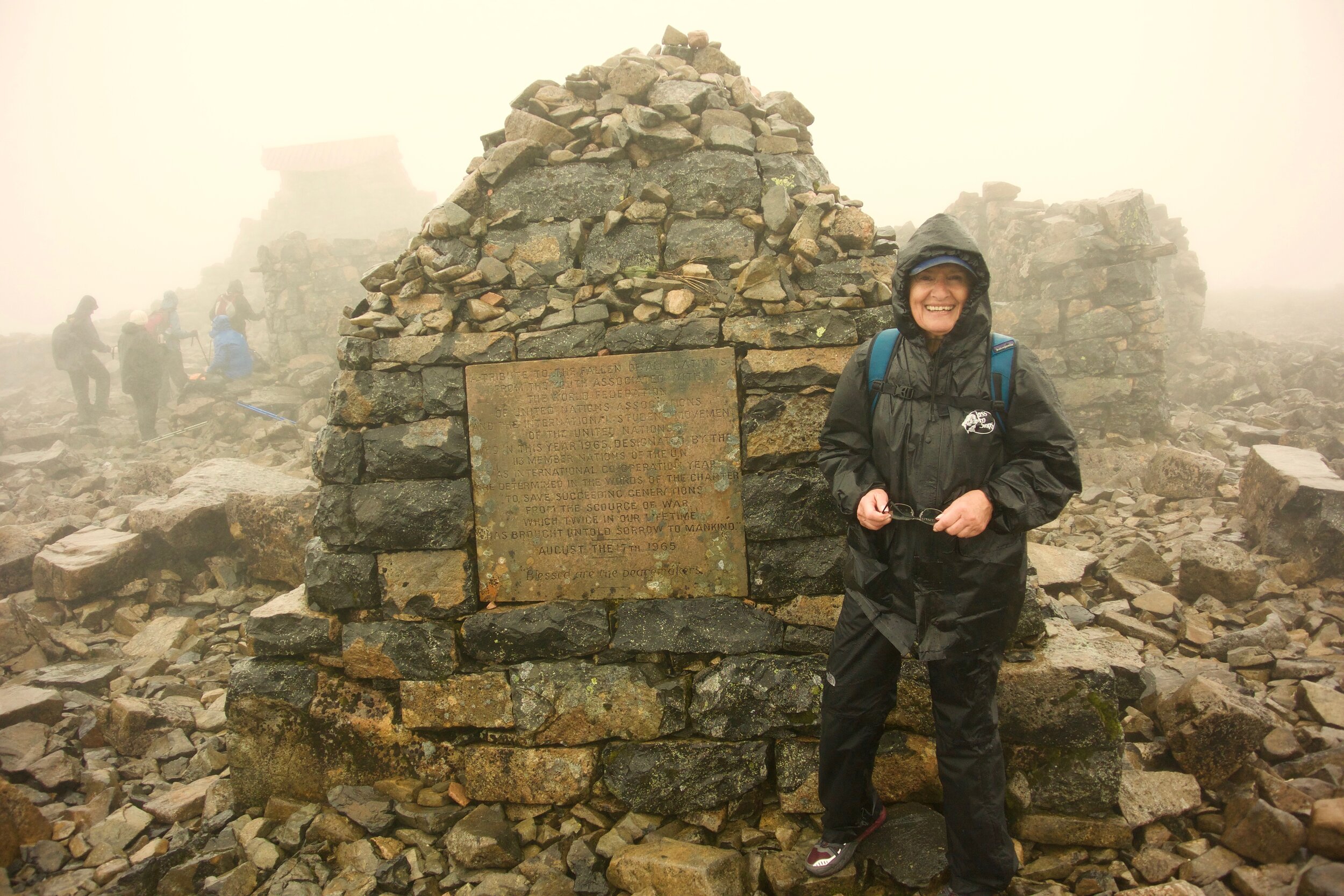
Tea and scones by the seaside, walk coast to coast across England, Tee time at St. Andrews, Climb Ben Nevis, high tea on the Jacobite steam train